Replace a broad subject with a study question
“Public transit access” can expand into routes, prices, reliability, safety, disability access, housing, and regional planning. Before building a research map, write what the study needs to learn. A question such as “What prevents shift workers in the east district from reaching the hospital before 7 a.m.?” narrows the inquiry without deciding what the answer will be.
Record who asked the question and what decision the findings may inform. A study for service planning differs from an academic overview of transit systems. The intended use helps determine which evidence matters, which groups should be heard, and what falls outside the project’s scope.
Build branches around dimensions of the question
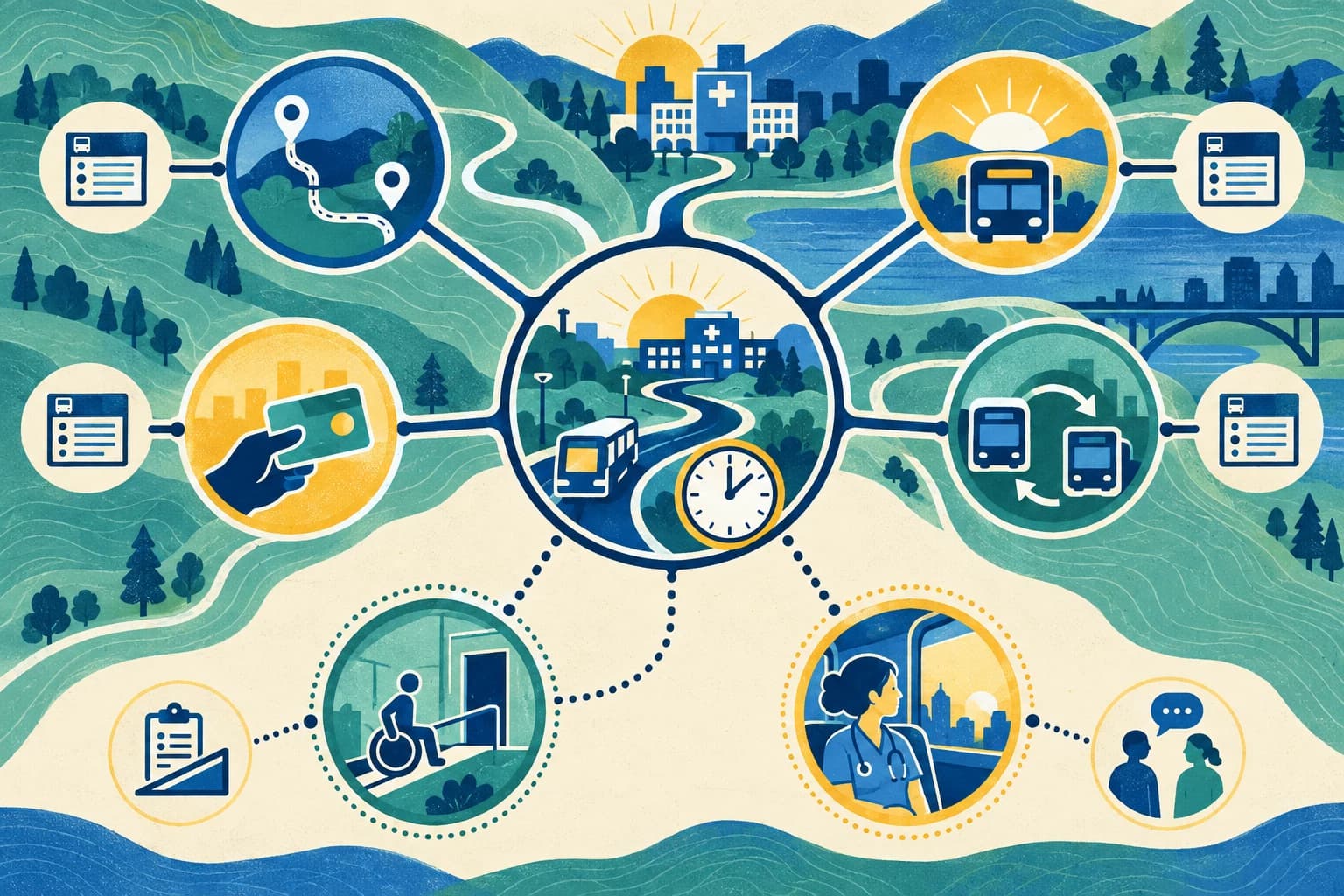
For the shift-worker question, first-level branches might include route availability, schedule timing, transfer reliability, fare cost, physical access, and rider experience. These are dimensions that could affect the trip. Under schedule timing, add first departure, connection windows, and work start time. Keep branches parallel so the map does not mix causes, sources, and proposed solutions at the same level.
Use the map to surface assumptions. The team may believe that route availability is the main barrier, but riders may point to an unreliable transfer or the cost of a second fare. Mark presumed causes as hypotheses. A mind map helps organize inquiry; it should not make an early theory look like an established finding.
Connect questions to evidence sources
For each branch, write a researchable question and a possible evidence source. “Do first buses arrive early enough?” may require schedule data and rider accounts. “Can wheelchair users reach the stop?” may need a site audit and direct input from people who use mobility devices. Different questions require different methods; a map can make those needs visible before data collection begins.
Avoid assuming that one source answers every branch. A route map may show where buses travel but not whether a transfer is dependable in practice. A survey can reveal reported experience but may miss people who do not have reliable internet. Note limitations beside each source and seek complementary evidence where a decision depends on it.
Set boundaries and protect participants
A study can quickly grow beyond its available time and capacity. Decide whether to include only weekday trips, only a defined district, or a particular shift window. Put those boundaries on the map so stakeholders do not assume the findings cover all riders or all hours. A clear boundary helps interpret what the research can and cannot support.
Research involving riders may include sensitive employment or accessibility details. Follow the project’s ethics and privacy practices, obtain appropriate consent, and avoid storing identifiable information in an open mind map. Use anonymized themes for planning and keep participant records in approved systems. The diagram should organize questions, not become an uncontrolled repository of personal data.
Turn the map into a feasible plan
Review branches for duplication and feasibility. If “transfer reliability” and “connection timing” overlap, clarify whether one is a condition and the other an outcome. Choose a small set of questions that the team can answer with available access to data and participants. Move broader questions into a future research list rather than pretending they will all be covered.
Assign an owner, method, and expected output to each selected question. One branch may need a timetable analysis; another may require a rider interview or an access audit. The map can feed a research plan, but the plan should contain dates, recruitment details, and safeguards. Keep these artifacts connected without forcing the study logistics into every branch.
Use findings to revise the map
As evidence arrives, mark which hypotheses are supported, challenged, or still uncertain. If riders identify a fare transfer rule that the team did not know, add it as a new branch and decide whether it changes the study. Preserve the original question so later readers can see how the investigation evolved.
Before sharing findings, ask a representative reader to trace a conclusion back to its evidence. If a branch has no supporting source, do not state it as a result. Update the scope note and limitations. A research mind map is valuable when it helps a team ask better questions, choose appropriate evidence, and resist the temptation to claim more than the study established.
Put the transit-access research question in Autodiagram’s title field and nest evidence questions beneath routes, schedules, cost, and rider experience. Choose a mind-map layout, then edit hypotheses so they are visibly distinct from findings. Keep participant records in approved systems; export the high-level research map as PNG or SVG for the study plan.