Return to the launch intent and assumptions
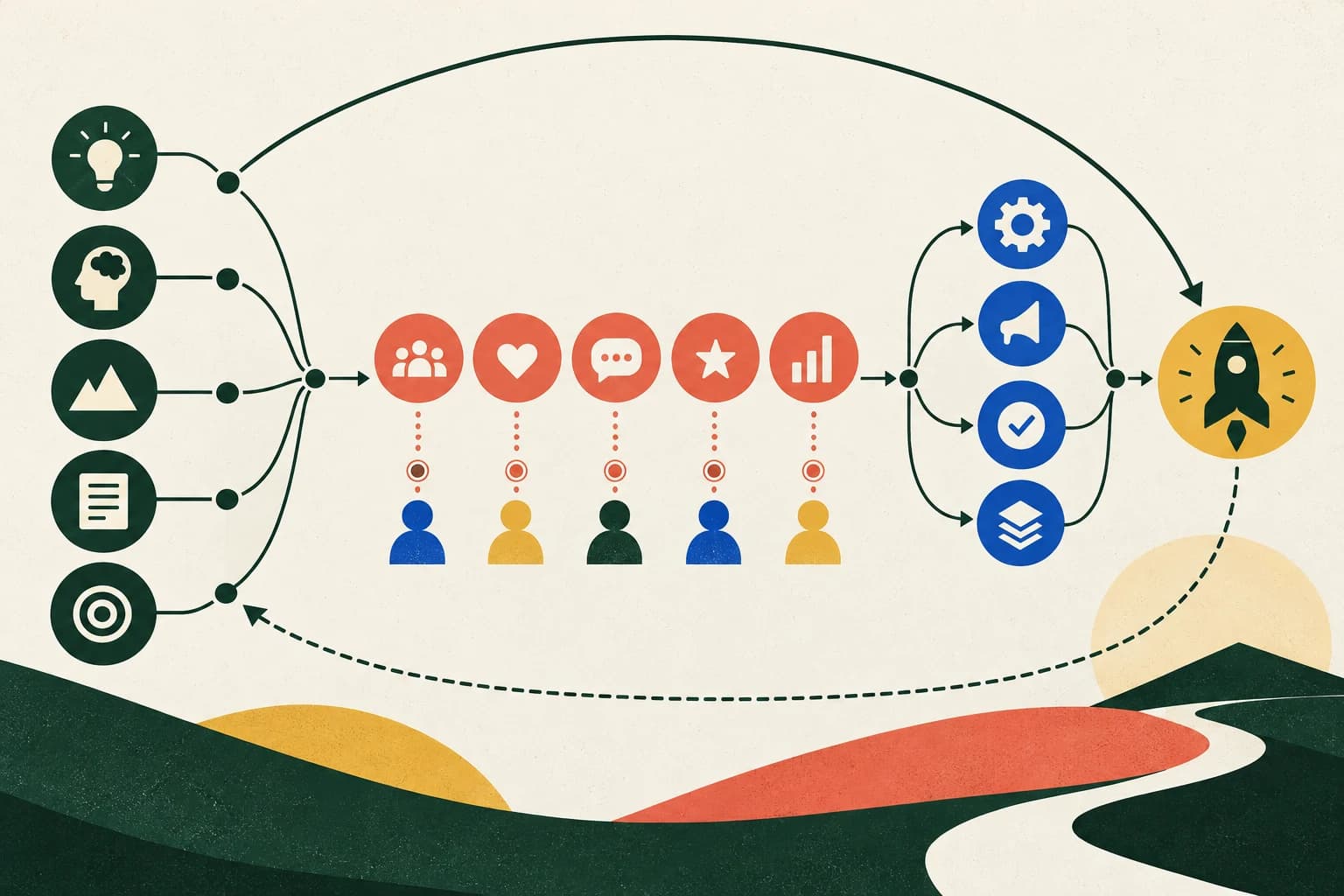
A launch retrospective should compare what the team expected with what happened. Revisit the intended audience, user problem, rollout boundary, and assumptions recorded before release. Without this baseline, the conversation may focus on whichever support case is most memorable. Bring the original launch plan and decision record so participants can examine whether expectations were reasonable and evidence-based.
If a new reporting view launched to administrators, the team may have expected that users would discover it from the workspace navigation and complete a saved report without help. The actual rollout may show good discovery but confusion about sharing. Separating those assumptions prevents the team from saying the launch “worked” or “failed” as a single judgment. It creates a specific question: did the view solve report repetition, and what remains difficult about collaboration?
Combine product, support, and customer signals
No one data source explains a launch. Review product behavior, support themes, customer conversations, and operational effects together. Define each measure and its limits. A usage event can show that a feature was opened but not whether the task succeeded. A support ticket can reveal a problem but not its prevalence. Customer feedback can explain context but may come from a narrow group.
For the reporting view, product telemetry might show that administrators create saved views, while support cases mention access errors and interviews reveal uncertainty about who can share them. These signals tell a richer story than a single adoption rate. Ensure the analysis uses appropriate privacy safeguards and a clear observation period. Ask owners to explain anomalies rather than smoothing them away. If data collection was missing, record that as a learning gap for the next launch rather than inventing a conclusion.
Trace unexpected outcomes to conditions
When outcomes differ from expectations, map the conditions that may explain the difference. Consider eligibility, onboarding, data quality, timing, and user role. Avoid assigning causation because two events happened together. State hypotheses and plan a way to test them. A launch retrospective is not an exercise in finding a person to blame for a low metric or noisy support channel.
Suppose fewer users save views than expected, but the launch also reached only accounts with a particular permission configuration. The team should examine whether eligibility or discoverability constrained use before concluding the feature lacked value. If support had no article for sharing, missing guidance could be one contributing condition. Show the evidence for each possibility and assign investigation. The map can separate confirmed causes from candidate explanations so leaders do not fund the wrong fix.
Review the response system as well as the feature
Launch quality includes how the organization responded when users encountered problems. Examine escalation paths, support preparation, communication ownership, monitoring, and rollback decisions. If a known issue was handled well, preserve the practice. If the response was slow, trace whether the cause was unclear ownership, missing evidence, or a tool gap. A feature can work technically while the surrounding launch system fails its users.
An access issue might have been reported to support, but the case could have bounced between account configuration and product engineering. The timeline shows who owned the customer reply and how long diagnosis waited. Ask what information would have made routing faster. If the issue needed a product fix, check whether the launch monitoring detected it before customers reported it. This helps the team improve readiness without conflating response problems with interface design.
Choose a small set of follow-up changes
Translate findings into decisions for the current release and improvements for future launches. Separate a repair, a product refinement, a process change, and an item that needs more evidence. Assign an owner and a way to assess the result. Avoid giving every observation a project; some findings are informative but do not justify work. Explain the decision to defer when stakeholders are likely to revisit it.
The team may correct the sharing label now, add a support article, and test role expectations with a second customer group before expanding access. Each action addresses a different part of the evidence. A broad “improve adoption” task would not. Set a review point for the second group and a decision about wider rollout. Ensure support and account teams know what has changed. Follow-up should be proportionate to evidence and clear about the intended outcome.
Update the launch playbook with what was learned
At the end of the retrospective, decide which launch practices should change and update the shared playbook. Remove steps that added no value and add only guidance supported by this experience or another known need. Assign maintenance ownership. Keep specific product lessons with the product record and general coordination lessons in the launch process, so future teams can retrieve the right information.
If support was ready but analytics definitions were unclear, the next launch template may need a short field for event purpose and validation owner. It should not grow a full metrics framework that every release cannot maintain. Share a concise readout with contributors and note unresolved questions. In the next launch, test whether the revised practice improves clarity. The retrospective completes its cycle when learning changes future work and the team returns to see whether that change helped.
Use Autodiagram to connect launch expectations, customer signals, response, and follow-up actions. Keep sensitive evidence in its source system and export a PNG for the retrospective.