Choose a beginning that explains the change
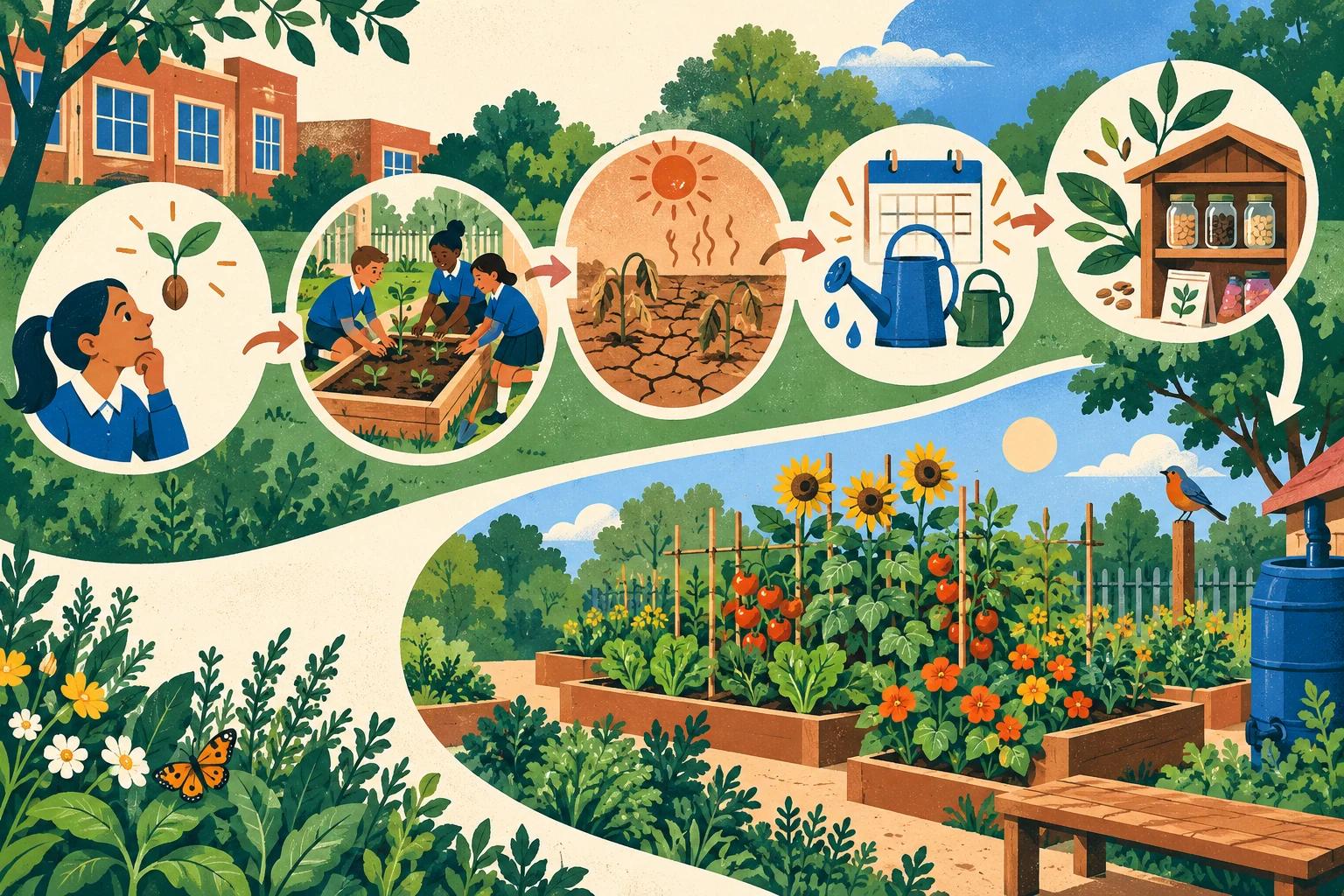
A timeline can turn a project history into a story, but its first date should help the audience understand why change began. For a school garden, the opening might be a request from students for an outdoor science space, not the day someone first bought seeds. The starting point frames the purpose of everything that follows.
Ask what the audience should understand by the final milestone. Perhaps they need to see how an idea became a maintained learning resource. That outcome suggests the timeline should include people, decisions, and the care plan—not every class that visited the garden. A clear story has selection and sequence; it is not an exhaustive diary.
Pick turning points rather than routine events
Select events that changed the project’s direction: students identified a need, a teacher secured a small pilot area, the first planting exposed a watering problem, and the team revised the care schedule. Each milestone should alter what happens next or deepen the audience’s understanding. A monthly work session may be omitted unless it marks a meaningful transition.
Write each label as an event plus significance. “First planting” is a milestone; “first planting showed that the afternoon watering rota had no backup” explains why the next decision mattered. Keep labels concise and use a caption or speaker notes for the supporting detail. This gives the audience a story without burying them in paragraphs.
Show people and decisions in the sequence
A garden is maintained by students, teachers, caretakers, families, and community partners. Show who contributed at key points and what they did. For instance, the caretaker may identify a water access constraint, while students suggest a planting plan. A timeline focused only on dates can make the project appear to have advanced without anyone’s work.
Represent decisions as choices with consequences. The team might choose raised beds after checking the ground surface, then adjust the height after students test them. This makes adaptation visible. Avoid implying that every participant agreed with every choice; if priorities differed, name the tension and how the team resolved it.
Use a setback to explain adaptation
The first summer may bring dry soil and missed watering days. Include the setback only if it teaches the audience something about the project’s evolution. Pair it with the response: a backup rota, a rain barrel review, or a change to the planting plan. A problem without a response can make the story feel unresolved; a response without the problem can seem arbitrary.
Be precise about what the team learned. Do not claim that a new schedule solved every issue unless the evidence supports it. Say that the trial revealed a need for a named backup and show whether one was assigned. The timeline can honestly communicate progress while leaving room for work still in development.
Balance narrative with accurate chronology
A story-driven layout can tempt the author to rearrange events for dramatic effect. Keep chronology accurate and mark approximate dates as approximate. If two developments happened in parallel—fundraising and site approval—show separate lanes or a shared period instead of implying one caused the other.
When sequence does suggest causality, verify the connection. Student feedback may have informed the bed height, but did it also drive the funding decision? Use a connector or phrase such as “led to” only when the record supports it. A timeline’s order is persuasive; readers may infer relationships even when none were intended.
End with the current state and next chapter
The final milestone should explain where the garden stands now: planting beds are in use, a care rota is active, and the next term will test a student-led seed library. Avoid ending at a launch celebration if the project’s sustainability is the point. The audience should see what the journey produced and what remains ahead.
Before presenting, ask someone outside the project to retell the story after viewing the timeline. If they understand why the garden began, what changed, and what happens next, the reading path works. Keep a fuller project archive for detailed records. A narrative timeline is a carefully selected explanation, and its credibility depends on fair selection as much as attractive design.
Enter the garden’s turning points in Autodiagram as dated entries, then choose a timeline layout. Edit each milestone to pair what happened with the decision or learning that changed the next step. Adjust the style for a presentation and export PNG or SVG, while keeping detailed source records in the project archive.