Set a purpose that respects the customer’s time
A customer workshop should have a purpose the participants can understand and a result they can use. Avoid describing it as an open-ended chance to “brainstorm.” State what the team wants to learn, why the customer’s perspective matters, what will happen with the notes, and what the session will not decide. Be clear about incentives, recording, confidentiality, and whether the customer can decline any activity under the organization’s research practices.
If a team wants to understand how store managers handle inventory discrepancies, it can invite participants to walk through a recent example and identify where they had to switch tools or ask for help. The workshop is for learning about the workflow, not persuading them to endorse a proposed dashboard. Sharing that boundary helps participants give candid feedback. It also prevents a later stakeholder from treating an exploratory session as customer approval for a solution.
Ask for a recent example before an ideal process
People can describe what they believe should happen more easily than what happened in a specific moment. Ask about a recent instance, what triggered it, who was involved, what information was available, and what they did next. Invite participants to distinguish routine behavior from a workaround. Use neutral prompts. “Why did you fail to use the form?” frames the customer as the problem; “What made the form hard to use in that moment?” opens the inquiry.
For the inventory session, a manager might recall finding a mismatch at closing. Ask what item was affected, which records they checked, how they decided whether to recount, and who approved an adjustment. The concrete account can reveal that a spreadsheet is used because the official report arrives after the shift. A generic “we need better stock visibility” statement would miss that timing dependency. The map should preserve the example’s sequence and context without turning one participant’s routine into a universal claim.
Use activities that surface decisions and constraints
Choose activities that help participants show how they work. They might arrange task cards, annotate a sanitized process, or compare two hypothetical situations. Explain the activity and let participants correct the facilitator’s understanding. Avoid asking them to invent a product feature too early; solution brainstorming can crowd out the problem and make people feel responsible for designing the company’s product.
Give the manager a simple scenario: one shelf count is lower than the system record, while a delivery is expected tomorrow. Ask which records they consult and what they do before changing stock. Their decisions reveal constraints around supplier deliveries, audit trails, and authority. Then change one condition, such as a high-value item, and ask what changes. This contrast helps distinguish a general workflow from a special risk path. Document the participant’s own terms, then clarify terminology before using it in a public summary.
Manage power, pace, and disagreement
Participants may have different authority, confidence, or familiarity with the topic. Give everyone a chance to contribute and avoid allowing a manager to answer for a frontline colleague. Quiet reflection or small-group work can help. If people disagree, ask what context explains the difference. Their accounts may reflect different locations, policies, or responsibilities rather than one person being mistaken.
A regional manager may describe a weekly reconciliation while a store lead recounts a daily emergency check. The facilitator can ask when each practice occurs and which conditions change the cadence. Represent both routes until evidence shows how they relate. Do not force consensus to make the final visual look simple. A useful workshop can end with a sharper question—perhaps whether stores share a policy or use local procedures—rather than one tidy but inaccurate process.
Close with a transparent synthesis
Before participants leave, summarize what you heard and invite correction. Separate observations, interpretations, and open questions. Explain how the team will use the material and when the participants might hear back. Do not promise that a product change will follow. If you intend to share a synthesis externally, explain what details will be anonymized and follow consent terms. Give participants a contact for correcting a factual misrepresentation or withdrawing according to the study agreement.
For the inventory workshop, the closing synthesis might be: “We heard that late data makes a closing-time mismatch hard to resolve; managers use a local sheet as a temporary reference; we still need to understand how permissions differ by store.” Ask whether that accurately reflects the discussion. This wording preserves a signal without claiming the team has proven its frequency. It gives participants a chance to add context the facilitator missed and gives the product team a grounded list of next questions.
Turn workshop material into a next step
Afterward, review the notes against the original purpose and identify what the workshop can and cannot support. Triangulate with other sources before making broad claims. Assign follow-up questions, owners, and a decision they will inform. If an observation suggests a safety, privacy, or compliance concern, use the organization’s appropriate route instead of leaving it in a general brainstorm file. Store recordings and notes according to the agreed retention and access rules.
The next step may be a short comparison across store policies, a prototype test of an exception view, or no product action until the reporting schedule is understood. Record why the team chose that route. Send an appropriate thank-you and, where promised, a summary of what happened to the input. A workshop is successful when it improves understanding and leaves participants with a respectful account of how their contribution will be handled, even when the eventual product decision differs from their suggestion.
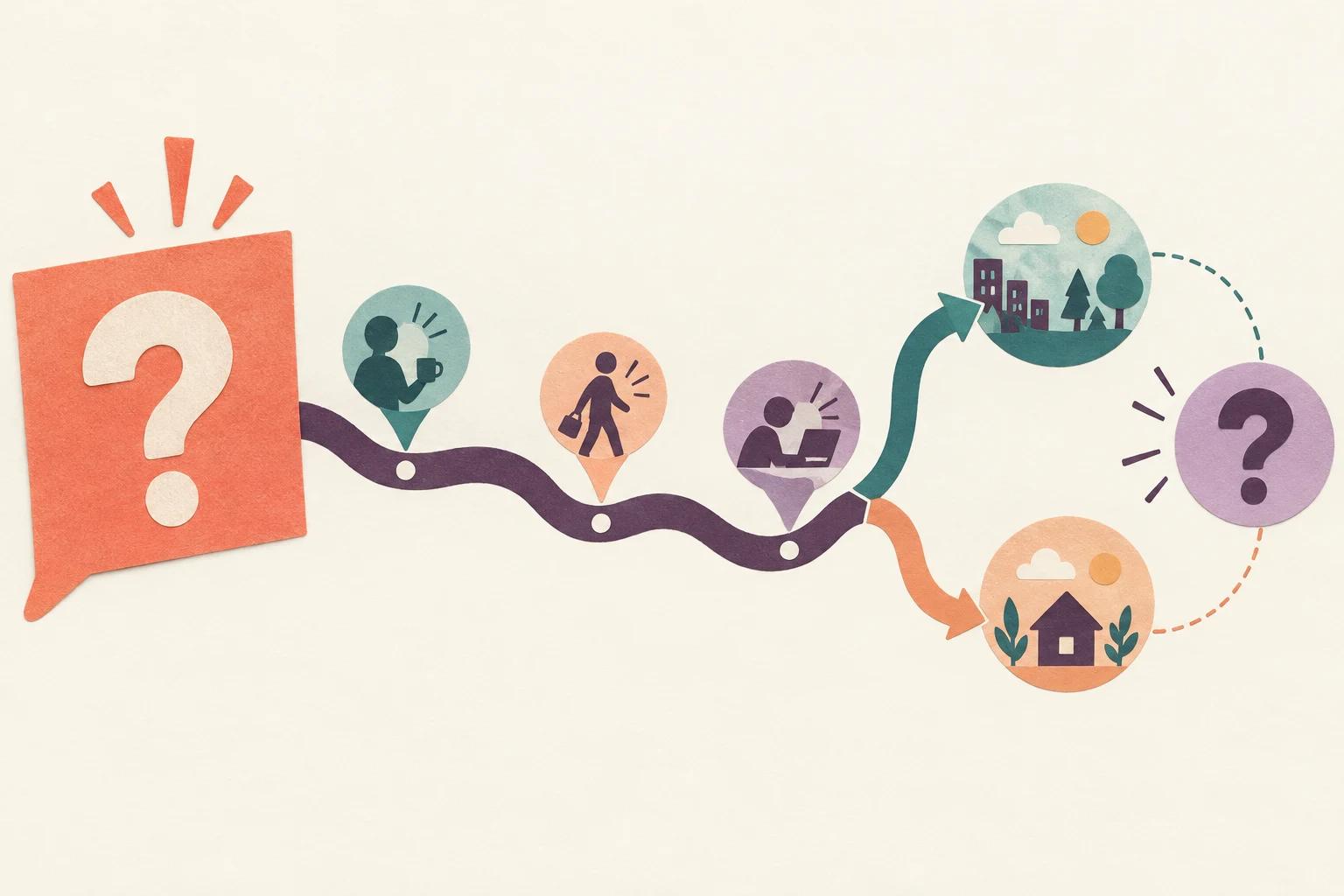
Prepare a customer journey scaffold in Autodiagram with participant actions, backstage handoffs, and open questions. Keep raw research notes in approved storage; export the visual after the workshop for synthesis.


