Set a practical and inclusive learning goal
A workshop should promise a skill participants can practice within the available time. Define the audience, prior knowledge, and the conditions under which the skill applies. Avoid goals like “become an expert” or “understand everything.” Consider language, accessibility, equipment, and psychological safety before planning activities. Participants need to know whether they are expected to share personal experience or can use fictional examples.
A workshop on giving project feedback could aim for participants to identify one observable behavior, describe its effect, and propose a next step without judging the person. This is concrete enough to practice. The facilitator can invite people to use a fictional case if a real workplace example feels sensitive. State that the session does not replace formal performance or HR processes. Boundaries let learners participate without fearing that an exercise will become an evaluation of them.
Plan a sequence that alternates modes
People learn through a mix of explanation, demonstration, practice, reflection, and peer exchange. Design the sequence so no single mode dominates. Keep explanations short enough that participants can try the skill before attention fades. Build in transition time for different learning speeds and technology. If a task depends on a prerequisite, provide a quick resource or a simpler route rather than leaving some participants behind.
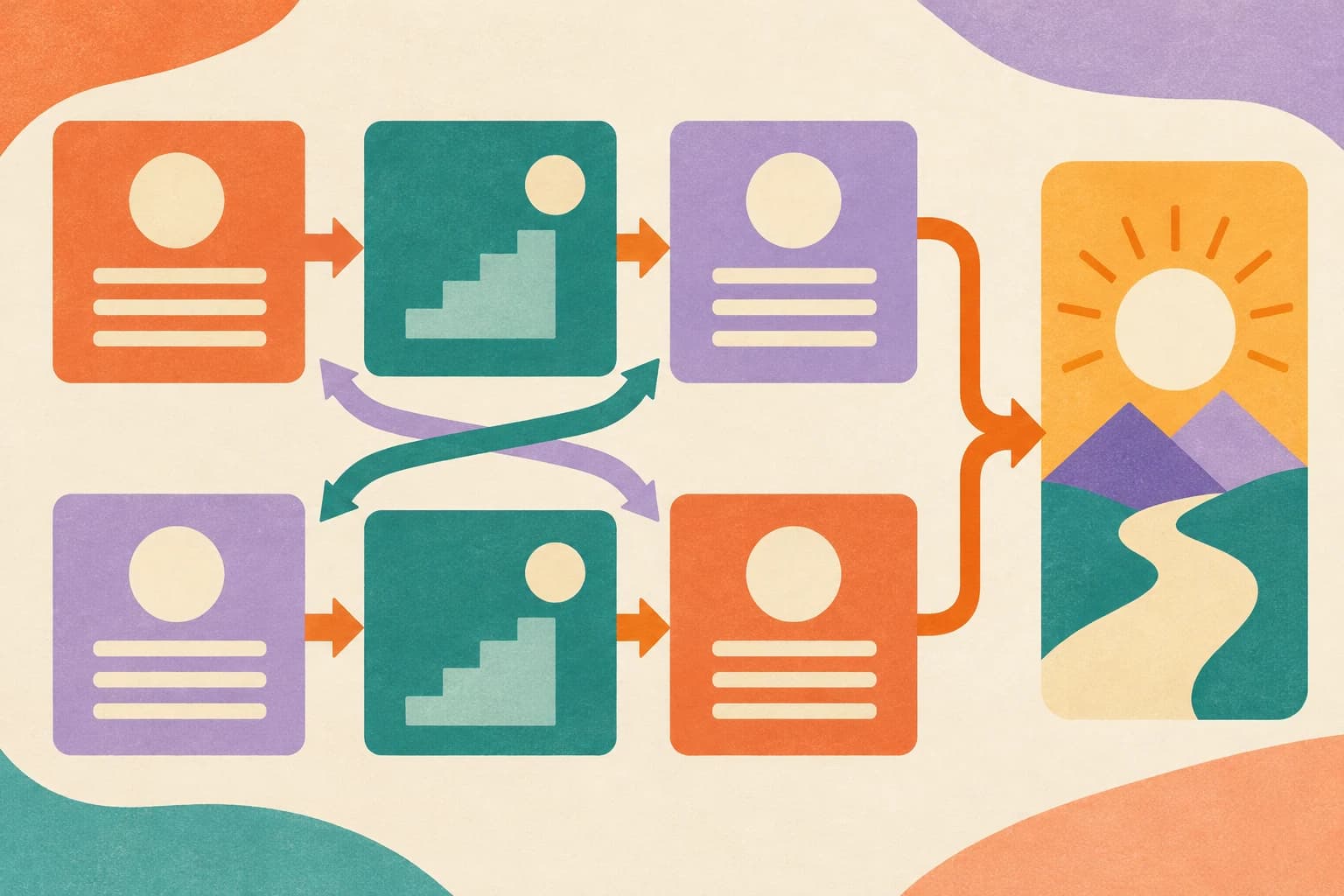
The feedback workshop might introduce the behavior-effect-next-step pattern, model it with a short example, ask individuals to draft a response, then invite pairs to revise it. A reflection prompt can reveal how the wording changes when the recipient is a peer versus a manager. The order matters: participants need a model before practice but should not hear so many examples that they simply memorize the facilitator’s phrasing. The map helps the facilitator keep the experience balanced.
Give learners enough structure to try
Open-ended activities can be energizing but can also leave beginners unsure what to do. Provide a prompt, a time limit, and success criteria. Let participants choose a suitable example within clear boundaries. Explain what observers should notice. If the goal is exploration rather than mastery, say so. A learner should be able to start without waiting for the facilitator to clarify every instruction.
For feedback practice, offer a fictional scenario: a teammate shares a draft late, leaving little time for review. Ask learners to write one sentence that describes the observable behavior and its project effect, then one invitation for a next step. Provide a sample only after they have tried. The structure supports novices while leaving room for different valid approaches. Avoid scoring the wording as if there is one perfect sentence; focus on clarity, respect, and relevance to the goal.
Facilitate participation across different comfort levels
A workshop is not inclusive simply because everyone is invited. Offer more than one way to contribute: speaking, writing, small groups, or private reflection. Explain how shared notes will be used. Notice when an activity favors people with more authority or prior experience. Invite disagreement about ideas without putting individuals on display, and provide a way to pass on sensitive prompts.
In a group exercise, ask participants to draft feedback silently before discussion. Pairs can compare approaches, then the facilitator can invite volunteers to share an anonymized version. This gives people time to think and reduces the pressure to perform in front of a larger group. If a manager and direct report attend together, consider separate groups for a practice that could feel evaluative. The facilitator should make the choice based on the session’s goal and the participants’ context.
Give feedback that helps another attempt
Feedback should connect to the stated skill and offer a useful next action. Encourage learners to explain what worked in a peer’s attempt and what remained unclear. Keep feedback specific and avoid comments about personality. The facilitator can model receiving feedback by asking a clarifying question or revising a sentence. This shows that practice is iterative rather than a test with a hidden right answer.
A peer might note that “you need to be more responsible” judges the person, while “the draft arrived after the review window, so the team could not check the data” describes behavior and impact. The next step could ask whether a rough draft can be shared earlier. The facilitator can explain that the wording should fit the relationship and situation; it is an example, not a universal script. Learners can try again and feel the difference. This immediate second attempt helps feedback become actionable.
Extend practice beyond the session
A one-hour workshop cannot create a durable habit by itself. Give participants a job aid, a low-risk opportunity to apply the skill, and a support route. If managers are expected to reinforce the practice, brief them on how to observe it and avoid turning it into surveillance. Check whether the workplace conditions support the behavior; people cannot give timely feedback if deadlines and authority discourage it.
Participants might try the feedback pattern in an upcoming project review and then reflect privately on what felt natural or awkward. A manager can discuss the team’s working agreement rather than evaluate individual word choice. The facilitator can gather optional feedback after a few weeks and revise examples. If the practice is not used, investigate workload, trust, or unclear expectations before adding another training session. Transfer depends on the environment as much as on the lesson.
An Autodiagram mind map can structure a workshop from objective to demonstration, practice, feedback, and transfer. Edit the activity branches and export a PNG for facilitator notes.