Show how practice changes the next attempt
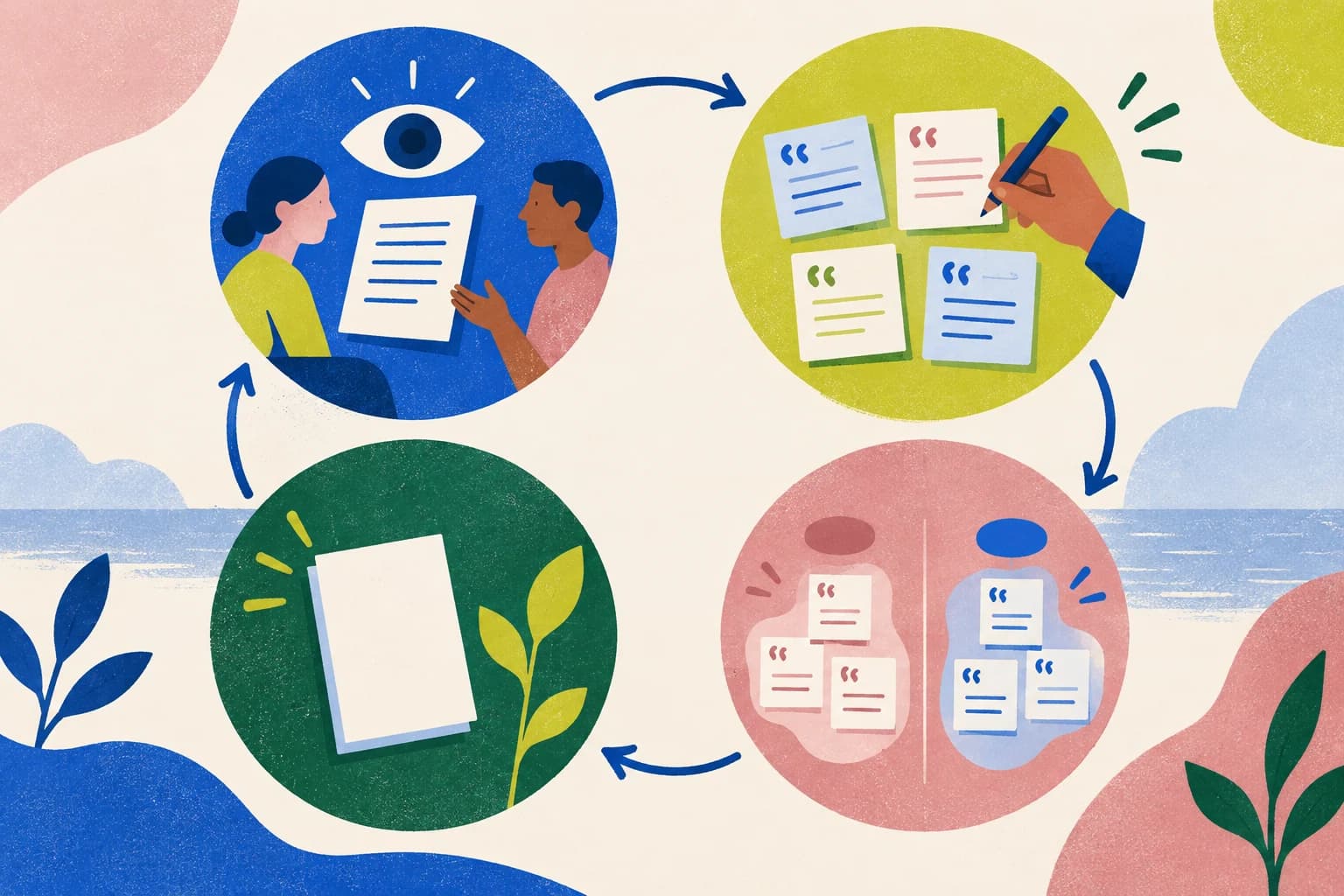
A learning cycle is not simply a sequence from beginner to expert. A new analyst observes an interview, tries a small synthesis task, compares their notes with an experienced colleague’s, and adjusts how they work next time. The return to practice matters: feedback changes the next attempt rather than ending at a score.
Choose one skill with a visible task. “Become better at research” is too broad for a cycle. “Group interview observations into themes without losing source context” gives the learner a concrete activity and a standard to examine. The map can then show what the learner does, what feedback arrives, and how they apply it.
Choose a manageable first practice
Let the analyst observe an interview and make notes about what the participant did, said, and encountered. Then ask them to group a short excerpt into themes while preserving a link to the original quote or moment. A narrow first attempt keeps cognitive load manageable and makes comparison more useful than reviewing an entire research project at once.
The practice should feel real enough to matter but small enough to revise. A short transcript section or a few observation notes can work. Agree what the learner may share and how sensitive participant information is handled. The learning map should point to the team’s privacy guidance instead of encouraging people to copy confidential material into an open board.
Make comparison specific and respectful
Feedback should refer to observable work: a theme combines two different behaviors, a quote has lost its context, or an inference is presented as a participant statement. “Be more analytical” gives the learner no next move. Compare the novice’s grouping with an experienced analyst’s reasoning, then discuss where both interpretations may be plausible.
Avoid presenting the expert example as the one correct answer when qualitative interpretation allows multiple defensible readings. The useful conversation is about evidence and reasoning: which observations support the theme, what alternative explanation exists, and what remains uncertain? A map can include “check source context” or “separate observation from inference” as reusable prompts for the next attempt.
Return the learner to a revised attempt
After feedback, have the analyst revise the same excerpt and explain what changed. Then let them try a new excerpt without direct coaching. This pair of attempts distinguishes editing a known task from transferring a method to fresh material. The cycle should lead back to application, not loop indefinitely around critique.
If the analyst repeatedly collapses distinct themes, the next practice might focus on naming categories and testing counterexamples. If they lose context, practice keeping source references alongside each note. The mentor chooses the next exercise based on evidence from the work. The diagram can show the decision point without prescribing a rigid curriculum for every learner.
Use reflection as evidence, not ceremony
A short reflection asks what felt difficult, what feedback changed the analysis, and what the learner will try next. Keep it connected to the work. A generic “How did it go?” can produce polite but unhelpful answers. Give the learner space to disagree with feedback and explain their reasoning; productive learning includes agency, not only correction.
Record a small example of progress, such as retaining the source link while writing a theme. Do not reduce skill growth to a single rating. A rating may help plan support, but the cycle should use actual artifacts and discussion to decide what practice comes next. Keep notes private and relevant to the learner’s development rather than turning them into a public ranking.
Know when the cycle can pause
A learner may reach a point where they can synthesize familiar interviews independently and ask for help on unusual cases. That is a useful pause condition, not a claim that learning is over. The map can end the structured practice loop while showing where to seek peer review for new methods or high-stakes findings.
Review the cycle with the learner after several attempts. Ask whether the exercises resemble their actual work, whether feedback arrives in time, and whether the next task is clear. Adjust the practice size or mentor cadence accordingly. A humane learning cycle creates repetition with purpose; it should not trap someone in endless evaluation or suggest that every skill can be mastered through the same sequence.
Enter the analyst’s observe, try, compare, revise, and apply steps in Autodiagram, then choose a cycle layout to show how feedback changes the next practice. Edit each node with a specific synthesis task rather than broad skill labels. A restrained palette can distinguish learner work from mentor feedback; export PNG or SVG for coaching materials.