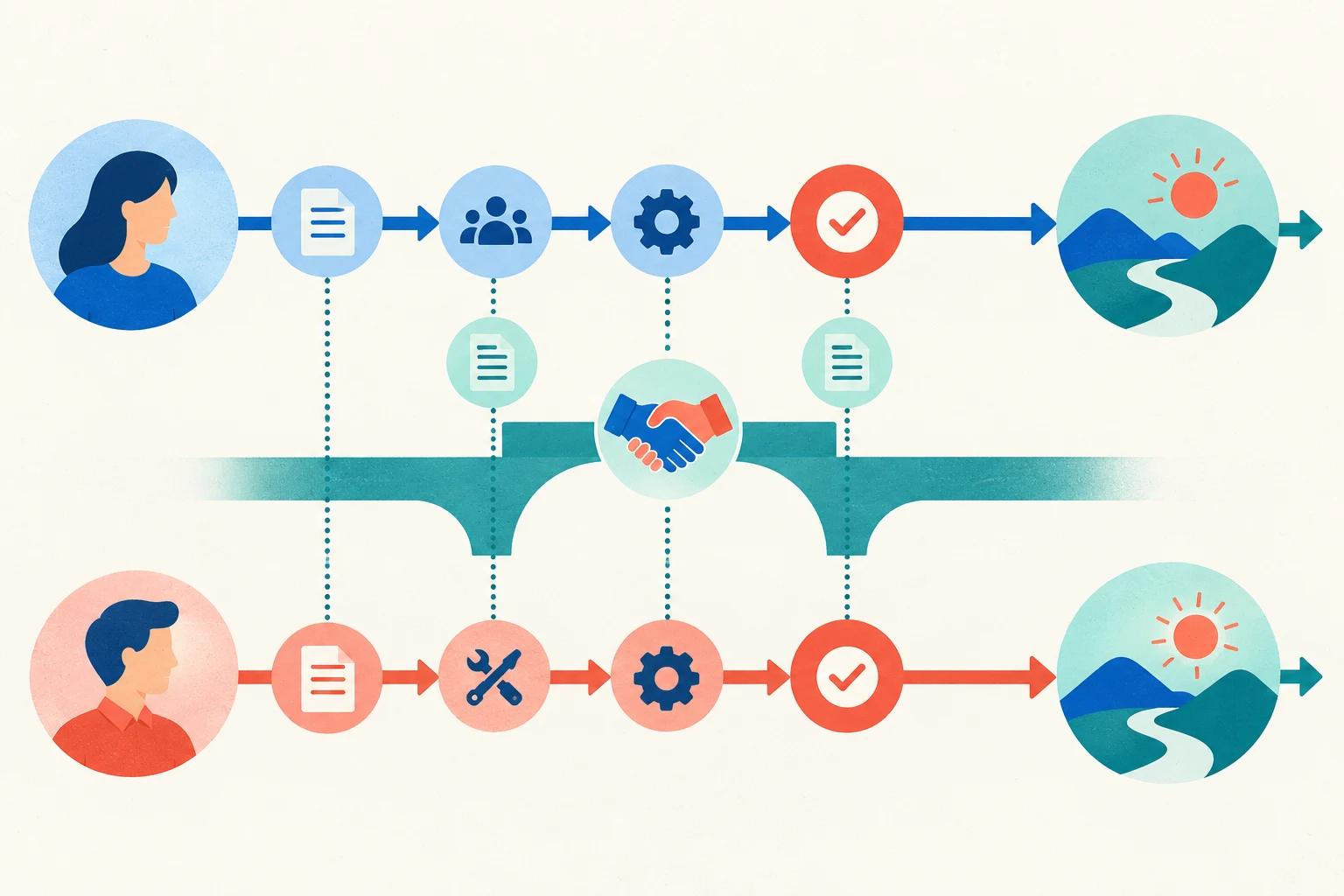
Distinguish a cycle from a one-way checklist
An editorial team that plans, drafts, edits, publishes, and reviews response is not finished when a page goes live. Learning from the published work changes what the team plans next month. That return connection makes the process a cycle. A checklist that ends at publication may be adequate for a single deliverable but hides the learning stage in recurring work.
Name the recurring unit: one article, one campaign, or a monthly batch. Without that boundary, the cycle can accidentally mix work that happens every week with annual strategy decisions. A title such as “Monthly editorial cycle” sets an expectation about cadence and helps editors distinguish the overview from the detailed writing checklist.
Give each stage an owner and an output
Theme planning might produce a brief with audience, question, and due date. Drafting produces a manuscript; editing produces approved copy; publishing produces a live page; review produces observations for the next plan. Include the role responsible for each output. “Team” can conceal who takes the next action when a stage stalls.
An output should be inspectable. “Review response” is vague; “record reader questions and pages needing updates” can be checked. The output helps the next stage begin without a meeting to reconstruct what happened. If two roles share ownership, define who makes the decision and who contributes rather than placing two names in a box with no accountability.
Draw the loop where learning returns
After publication, the editor may note which reader questions were unanswered, which claims need maintenance, and which topics deserve a follow-up. Link those observations back to theme planning with a label such as “informs next brief.” That phrase explains why the arrow returns; it does not mean every metric automatically changes the plan.
Do not build a feedback stage around vanity measures alone. A page view count may be one signal, while reader comments, sales questions, or support requests may expose a content gap. Decide in advance what the team can observe and what decision it is prepared to make. A cycle becomes a performative ritual if it collects numbers that no one uses.
Add gates without breaking the rhythm
An editorial cycle can include review gates for fact-checking, legal approval, or brand voice. Add a gate when it changes whether the work may proceed. If approval fails, show whether the piece returns to drafting or moves to a specialist. Avoid depicting every routine proofread as a separate major phase; too many gates make the diagram hard to use.
Some content needs a different route, such as a time-sensitive announcement or a technical guide. Use a side branch with clear criteria rather than forcing every item through identical steps. The cycle remains the main route, while the exception can explain the extra review. Link to detailed policy where necessary, especially for claims that need current verification.
Make cadence workable
A monthly rhythm can be too slow for urgent updates and too fast for a long research article. Show the recurring meeting or handoff as a target cadence, then identify what triggers an off-cycle review. The team might update a correction immediately while leaving broader topic planning for the next monthly session.
Give stages enough time and make dependencies visible. Editors cannot approve copy that has not been drafted; publication may need a scheduled slot. A cycle diagram does not replace a calendar, but it can point to the cadence and decision points that the calendar should support. Keep current dates in a separate planning artifact to avoid constant edits to the process map.
Review one full cycle before standardizing
Run one article through the draft cycle and note where ownership or information is missing. Did the editor know which audience the brief addressed? Did publication expose an unanswered question? Was anyone responsible for updating a page after a source changed? These observations are more valuable than polishing the diagram before the process has been tried.
Revise the cycle after a few real runs and ask writers and editors whether it reduces handoff confusion. Keep an explicit owner for the map and record significant changes. A recurring operation needs enough stability to be predictable and enough flexibility to respond to what the team learns; the diagram should make both qualities visible.
Draft the editorial stages in Autodiagram—brief, draft, edit, publish, review—and choose a cycle layout that visibly returns observations to the next brief. Edit the nodes to name outputs and owners rather than generic activity. Adjust appearance and font after the loop is clear, then export SVG or PNG for the team’s process guide.