Connect each piece to an audience need
An editorial calendar should explain why a piece deserves attention, not merely when someone hopes to publish it. For each idea, name the reader, the question they are trying to answer, and how the piece supports the publication’s purpose. A calendar crowded with titles can conceal a weak mix of repetitive topics. Review ideas for audience relevance, evidence availability, and the role they play alongside existing material.
A product team might propose an article about migrating a workflow from paper to a shared tracker. The audience could be a small operations team that needs a practical transition plan; the piece should help them make a decision, not simply list tool features. Connect it to a reader question and identify the evidence or expertise required. If the audience need is speculative, mark it and decide whether a quick conversation or search review should precede a full draft.
Map the editorial stages and decision points
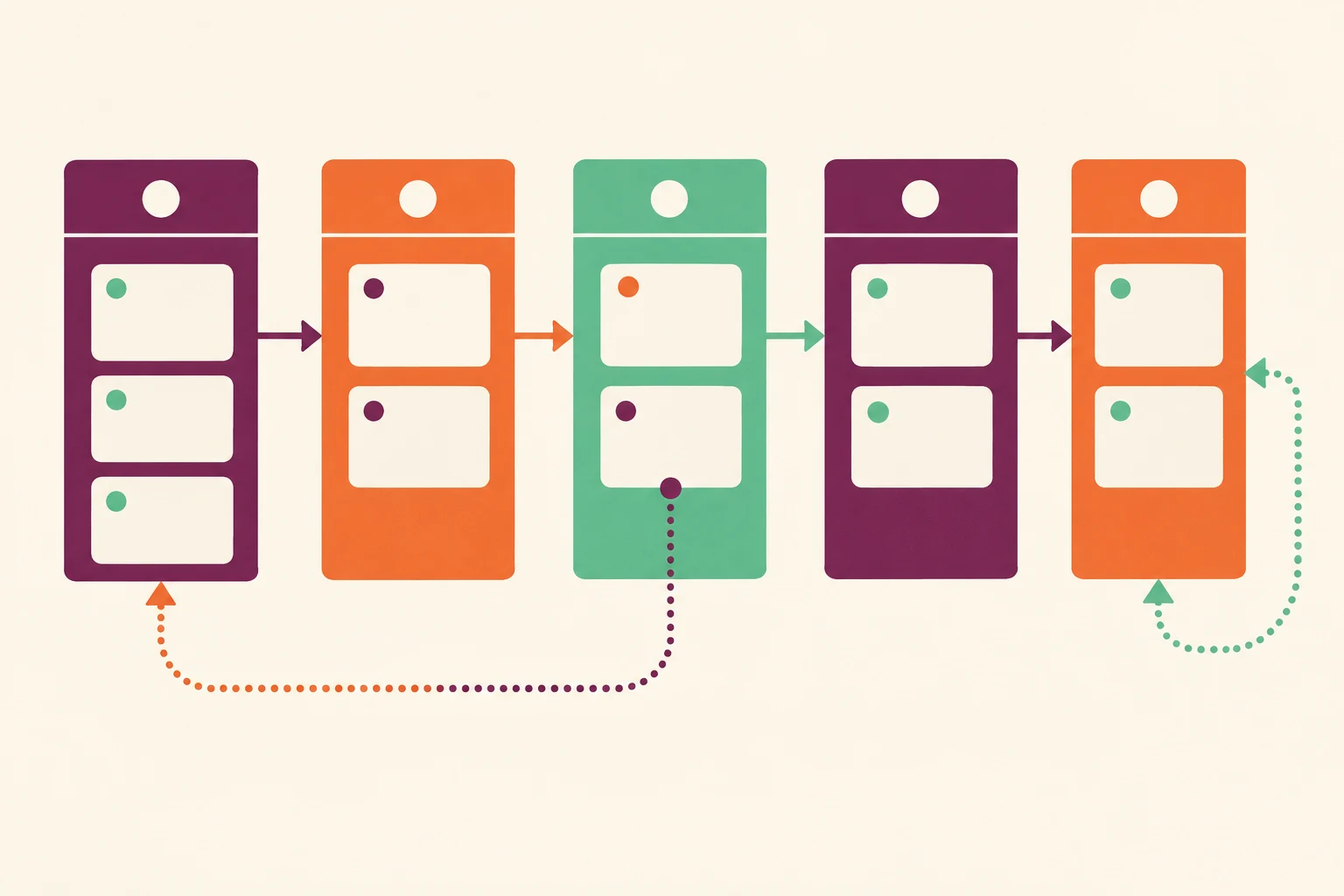
Define stages such as idea, assignment, research, draft, subject review, edit, production, and publication only where they reflect real handoffs. Give each stage a completion condition and an owner. A draft is not ready because it exists; it may need verified sources, a clear audience, or review from a specialist. Decision points help editors identify when an idea should be revised, paused, or dropped rather than pushed mechanically through the calendar.
The migration article may need an operations practitioner to confirm the examples before copy editing. The editor can assign a reviewer early so a critical dependency does not appear on publication day. If research shows the topic duplicates a recent guide, the decision gate may redirect the angle to a narrower question. Keep production tasks such as image selection connected to final copy, since significant revisions can invalidate a visual. This shows the relationship without turning one article into an elaborate project plan.
Schedule around capacity and dependencies
A publish date depends on more than the writer’s calendar. Consider review availability, specialist input, legal or brand approval where needed, and production time. Estimate work with the people responsible rather than assigning every item to a fictional open week. Reserve capacity for breaking priorities and maintenance. If the calendar fills every slot, the team has no way to respond to an important new question or a source that proves unreliable.
If a specialist reviewer is available only after a launch, schedule the draft so review can happen before publication rather than treating the date as fixed. A seasonal topic may have a genuine deadline, while an evergreen guide can move. Mark the difference. When capacity changes, decide which piece moves and tell downstream contributors. An editorial map can show flexible and committed dates separately, helping a team avoid the stress of treating every tentative idea as a public promise.
Protect accuracy through source ownership
Articles that include factual claims need a source path. Identify who checks claims, where sources are stored, and what date-sensitive statements require a fresh review. An editor should be able to distinguish a writer’s interpretation from a sourced fact. Keep source notes alongside the draft so fact checking does not depend on reconstructing a browser history. If evidence is insufficient, narrow the claim or remove it.
A migration guide might mention current software support or legal requirements. Those claims can change and need authoritative sources, while the article’s general advice about mapping dependencies is editorial reasoning. Treat them differently. Assign a reviewer with relevant expertise and record the check date for unstable material. If the article contains no external factual claims, it still benefits from subject review of the scenario and product descriptions. Accuracy is a process, not a last-minute spellcheck.
Use feedback without letting every reader rewrite the piece
Reviewers should know what kind of feedback they are invited to provide. A subject expert checks factual accuracy; an editor checks structure and reader value; legal counsel may review particular claims. If every reviewer comments on everything, authors receive conflicting preferences and the piece can lose its purpose. The editor resolves feedback against the assignment and audience, records material disagreements, and obtains a decision from the right owner.
A specialist may prefer more implementation detail while the intended reader needs a clear decision framework. The writer can preserve a short technical note in a linked reference while keeping the main piece readable. If a factual issue changes the premise, pause publication and revisit the assignment. Do not accept a review comment simply because it is authoritative outside its subject area. Clear roles help the team incorporate expertise without turning a useful draft into a committee document.
Review the calendar as an editorial portfolio
Look across the calendar periodically. Are the same audience and question appearing repeatedly? Are important reader needs absent? Does the team have sources and expertise for the scheduled claims? A portfolio review can reveal that the calendar’s pace favors easy topics over useful ones. Adjust the mix rather than filling empty dates with low-value pieces. A deliberate publishing gap can be better than an article produced only to satisfy a schedule.
After publication, note what the team learned from reader questions, corrections, and how the piece is used. Do not reduce editorial quality to a single traffic measure; reach, usefulness, and strategic fit are different. Update the article when facts change and assign ownership for that review. An editorial calendar should connect good ideas to reliable production while leaving room for judgment. It is a planning aid, not evidence that an article is valuable merely because it has a date.
Use Autodiagram to show an editorial piece moving from assignment through source review, editing, production, and upkeep. Keep dates in the calendar and export a PNG for the editorial meeting.


