Keep raw observations close to interpretation
Research synthesis becomes fragile when a striking quote is detached from who said it, what they were doing, and what prompted the comment. Start with observations that preserve enough context to interpret them later: participant or source label, task, moment, and relevant conditions. Use privacy-safe identifiers and follow the study’s consent and retention rules. A short excerpt can be helpful, but it should not replace the researcher’s account of the surrounding interaction.
Imagine several small-business owners trying to reconcile invoices. One participant says, “I just send it again,” after failing to find a status indicator. Another checks a spreadsheet before taking action. These are related behaviors, but not necessarily evidence of one universal preference. Keep the observations separate before grouping them. This makes disagreement and variation visible, and it gives the team a way to revisit a theme when someone asks whether it reflects multiple sources or one memorable moment.
Group by the user’s work, not by the research script
Interview guides organize questions for researchers; they do not always represent how users experience a problem. Group observations around tasks, decisions, and workarounds. A cluster labeled “uncertain whether invitation succeeded” may include different causes: delayed email, unclear interface feedback, and a recipient using a different address. Those distinctions matter because they suggest different remedies. The synthesis map should help the team see both a recurring need and the mechanisms that may create it.
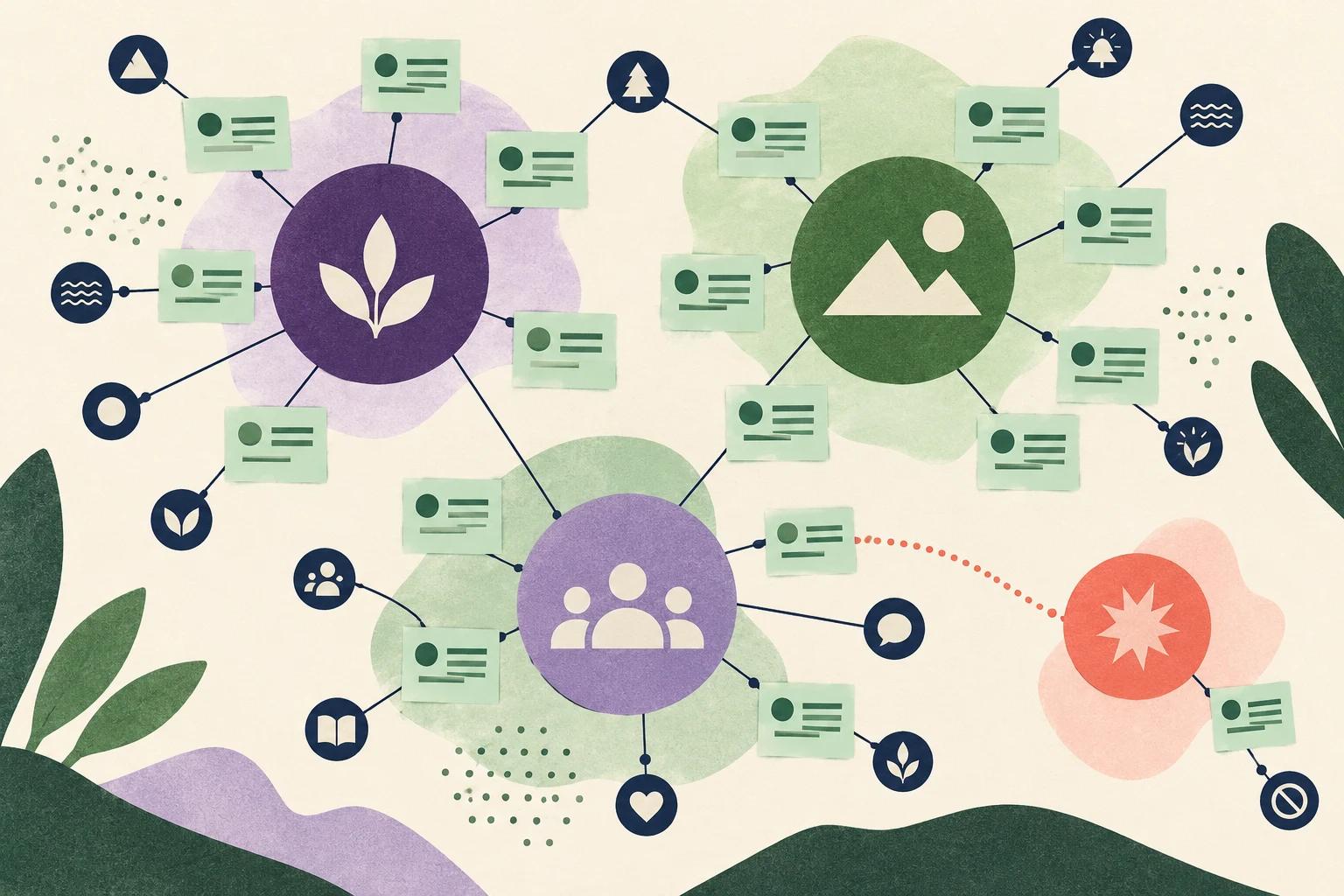
Keep cluster labels specific enough to be challenged. “Users want simplicity” is difficult to test. “Administrators look for confirmation before notifying a colleague” describes an observable goal. Add a short explanation and references to supporting notes. If a theme spans several tasks, show the connection instead of merging unrelated observations. Let the structure reflect the work participants described, not an attractive narrative imposed after the interviews.
Record counterexamples and variation
A synthesis that includes only confirming evidence can turn a tentative pattern into a product myth. Preserve counterexamples, such as users who understand the current status but want a different action, or people who rely on a separate system for reasons unrelated to the interface. Variation can reveal useful segments, contextual conditions, or a weak assumption in the original theme. It is not clutter when it changes the design decision.
For the invoice example, some owners may resend because they cannot see delivery status; others may resend because clients prefer a second reminder. Those behaviors look alike in a task log but reflect different needs. Mark the distinction and ask what further evidence would separate them. Resist declaring one behavior “edge case” simply because it complicates the preferred solution. If the team chooses to address one group first, identify that scope explicitly and explain how the others remain supported.
Move from themes to decisions carefully
A research finding does not dictate a feature on its own. Connect a theme to the decision it informs and state the reasoning in between. If administrators need confidence that access is active, possible responses could include clearer status, a receipt, or a way to verify permissions. The research supports the need; usability testing, technical constraints, and policy determine which response is appropriate. Show those additional inputs instead of implying that participants requested the exact implementation.
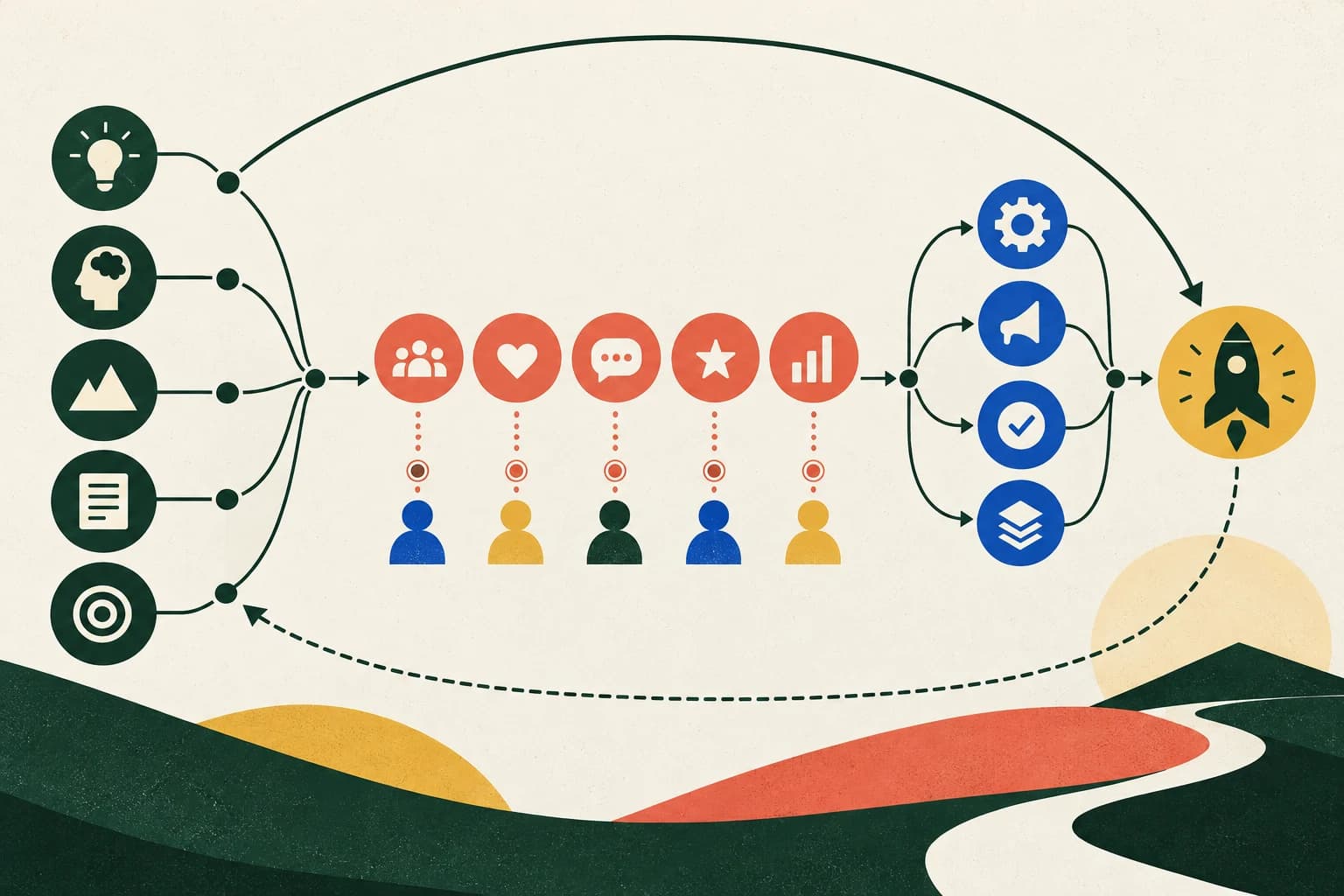
Use the synthesis map to frame the next question: What should the status communicate? When does a reminder help? Which role can correct the invited address? If the answer requires another study or prototype, note the method and the decision it will unlock. This keeps research connected to product work without asking a small qualitative sample to prove a population-wide claim. Be precise about what is known and what the team is choosing to test.
Make confidence and gaps legible
Not every theme has the same evidentiary strength. Explain the basis in ordinary terms: repeated in several sessions, observed in one workflow, suggested by a support note, or still a hypothesis. Avoid decorative confidence scores unless the team has a consistent method and knows what the number means. A visual distinction between observed, inferred, and open questions can help readers understand how much weight to put on each statement.
Be cautious with percentages from small or purposive samples. “Three of five participants” is a description of the sessions, not an estimate of all customers. If a quantitative source is available, show how it relates and whether it measures the same behavior. The purpose of confidence labels is not to make research seem scientific through visual precision; it is to make uncertainty discussable. A stakeholder should be able to challenge a claim without losing the observation that gave rise to it.
Invite review without rewriting participant voices
Ask another researcher or a product partner to inspect the path from source to theme. Can they find the supporting notes? Do they agree that the label describes the observation? Which alternative interpretation might fit? Review is stronger when it examines the reasoning, not just whether the map feels persuasive. If people who conducted the sessions disagree, preserve that disagreement and name the question that would resolve it.
When sharing with a broad audience, remove identifying details and quotes that could expose participants. Summarize sensitive material without weakening its meaning, and keep raw notes in the approved location. Include the study scope, recruitment limitations, and date so readers do not reuse a finding as timeless truth. A thoughtful synthesis is both a communication artifact and a careful chain of evidence from what people did to what the team decides to do next.
Create an Autodiagram mind map for research themes, counterexamples, and questions to investigate. Link source notes in your approved repository, and use the editable diagram as a discussion aid rather than a substitute for evidence.