Build the account story from evidence
A renewal handoff should provide an evidence-based view of the customer relationship. Summarize the goals agreed at the start, work completed, outcomes observed, and material gaps. Avoid describing sentiment as fact or relying on a single enthusiastic contact. Use approved account records and distinguish customer statements, usage data, and internal interpretation. This helps the next account owner enter the conversation prepared without assuming that the renewal is assured.
A customer may have adopted a workflow with one department while another still uses a manual process. The handoff should show the customer goal, which group uses the product, and what remains unresolved. It should note when the evidence was collected and whether the product measure is a proxy for the business outcome. This account of value can guide a renewal discussion and reveal where further customer discovery is needed.
Surface unresolved issues and prior commitments
Commercial conversations are damaged when a customer must repeat a long-running concern or discovers an undocumented promise. Record open support cases, product limitations, implementation work, and commitments made by sales or service teams. Mark owners and current status. If a commitment was conditional or exploratory, preserve that wording. Do not present a desired roadmap outcome as a contractual promise unless it is documented through the approved process.
Suppose the previous account owner discussed a possible data export enhancement but never confirmed timing. The handoff should say what was discussed, what the product team decided, and what the customer was told. If that decision is unknown, assign the current owner to verify before mentioning it. A live issue affecting invoice accuracy should be addressed before introducing an expansion proposal. Context helps the account team sequence the conversation respectfully and avoid appearing unaware of customer pain.
Map the customer’s decision group
Renewals and expansions often involve several stakeholders whose priorities differ. Identify the day-to-day user, champion, budget owner, technical evaluator, procurement contact, and any executive sponsor where known. Note how each role participates and when their information was last confirmed. Avoid assuming that the prior champion still controls budget or that access to a senior title means broad customer support.
A logistics account may have a dispatch champion, an IT owner concerned about integration, an operations executive focused on service continuity, and procurement managing renewal dates. The handoff can show the relationship and the question each role needs answered. It should also flag contacts who have not been engaged. The next owner can plan a review that includes the people who can assess both operational value and technical risk. This is more reliable than relying on one contact to represent every group.
Separate renewal risk from expansion opportunity
A customer can have room to expand while carrying unresolved renewal risk. Do not combine these into one optimistic account status. Show factors that may affect retention, such as unresolved support issues, low adoption in a target team, or a changing budget. Separately identify an expansion hypothesis and what evidence would validate it. This allows the account team to address current value before selling additional scope.
If dispatchers use the tool daily but supervisors do not trust the summary, there may be an expansion opportunity in reporting and a renewal concern around decision confidence. Selling more seats without resolving the latter could deepen dissatisfaction. Map both paths and assign owners. A customer conversation should explore the business need and the limitations honestly. The account plan should not use a potential expansion to obscure a risk that needs immediate attention.
Plan a conversation that earns the next decision
Identify what the upcoming meeting should achieve: confirm outcomes, resolve an issue, explore a new need, or understand the renewal process. Set an agenda that matches the customer’s priorities and include appropriate internal specialists. Do not use a renewal meeting to surprise the customer with a new commercial proposal if they expected a support review. Where a decision deadline exists, share it transparently and allow reasonable time for procurement.
The account owner might plan a review with the operations leader and dispatch champion to examine service continuity and unresolved reporting questions, then schedule a separate procurement conversation. The agenda should state what the product team can confirm and what remains under investigation. Ask the customer what would make the meeting useful. This supports a relationship based on informed choices rather than a seller’s internal forecast calendar.
Transfer ownership with a warm, accurate introduction
When account ownership changes, tell the customer who their new contact is, what context has been transferred, and how ongoing issues will be handled. Invite correction to the shared summary. Preserve continuity by scheduling a purposeful conversation rather than sending a generic introduction that asks the customer to recount everything. Ensure the new owner can access authorized records before the transition is announced.
A new account owner can say they understand the customer’s goal, the active reporting issue, and the teams currently using the product, then ask what has changed. This signals preparation while leaving space for correction. Keep private internal judgments out of customer-facing notes. After the introduction, review the account record and update it with new evidence. A strong handoff lets the customer make progress with a new person without losing the history that informed previous decisions.
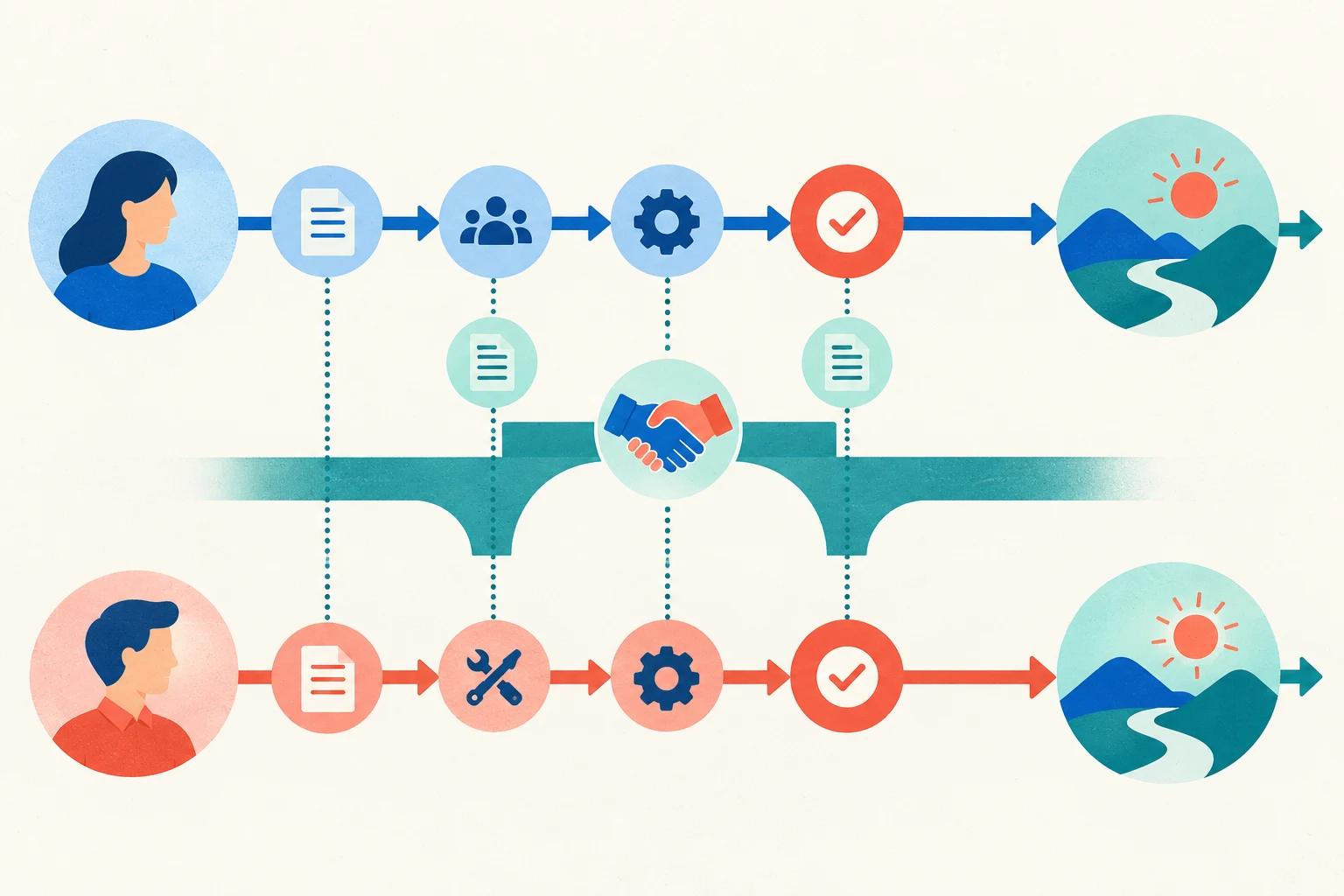
Autodiagram can show renewal outcomes, open concerns, customer decision roles, and confirmed next steps in one internal visual. Keep private commercial notes in the account system and export an SVG for handoff.