Transfer the customer’s goal, not just the deal record
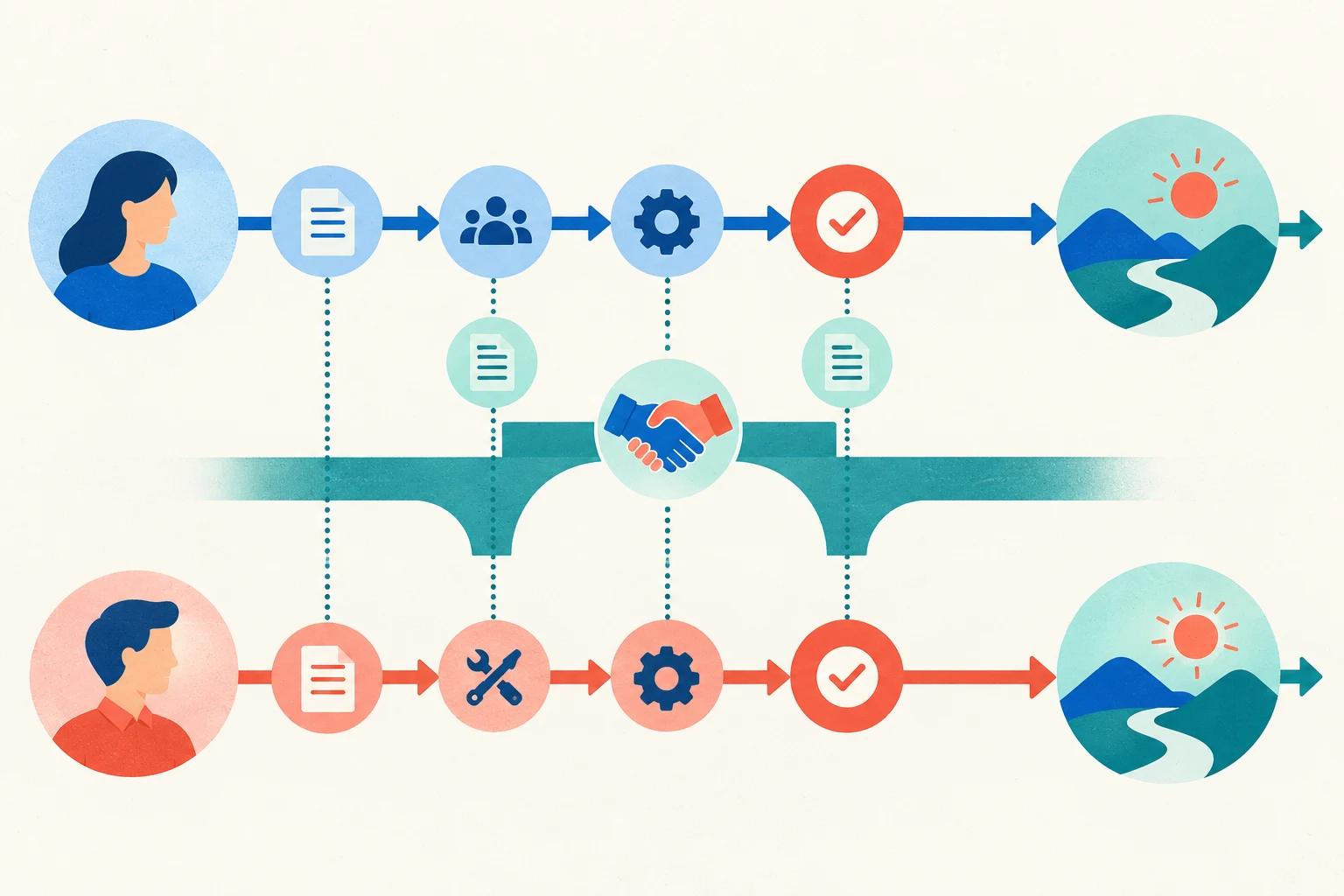
A handoff is useful when delivery understands why the customer bought and what change they expect. Begin with the customer’s goal in their own operational terms: reduce duplicate entry, give managers a current view, or make a specific workflow easier to audit. Then distinguish that goal from the product features discussed during sales. A list of requested capabilities may omit the underlying need and make it harder to identify a safe alternative when a requested behavior is not supported.
For a small retailer adopting an inventory tool, the stated goal might be to reconcile stock before opening each day. The sales conversation may also have covered barcode scanning, role permissions, and importing a supplier file. Delivery needs to know which capability is essential to the goal and which is a preference. Include the customer’s definition of a successful first week, the people who will use the system, and any operational calendar that constrains setup.
Record commitments with their exact status
Promises become risky when an exploratory conversation is retold as a firm commitment. Capture each material statement, who made it, when it was made, and whether it is confirmed, conditional, or still under review. Include a source such as an agreed proposal or a follow-up email according to company policy. If a capability is uncertain, preserve that uncertainty instead of smoothing it away to make the handoff look complete.
A salesperson may have said that a supplier file “should be straightforward to import.” That is not the same as promising a specific format will work. The handoff should say what sample was examined, what remains unknown, and who will verify compatibility. Delivery can then set expectations before implementation begins. If the customer heard a stronger promise, flag the discrepancy early and assign a commercial owner to resolve it. Silence lets the mismatch grow into a delivery conflict.
Map people, data, and readiness dependencies
Delivery depends on more than configuration tasks. Identify customer decision makers, day-to-day users, data owners, technical contacts, and approval roles. Note who can provide source data and who can approve a workflow change. A role label is often safer and more durable than a personal contact detail in a broadly shared artifact, but the team needs a secure route to the named person. Make access requirements and data-handling constraints visible before anyone requests sensitive files.
The retailer may need to provide a product export, choose an inventory owner, and identify who can approve the opening-stock count. These are separate dependencies with different owners. Show what each unlocks and what can proceed while it is pending. If data preparation is on the critical path, agree on a sample and a due date with the customer rather than assuming a complete export will arrive. This gives delivery a way to spot a delay before it jeopardizes the customer’s intended start date.
Agree the first milestone and its evidence
Avoid a handoff that describes success as “implementation complete.” Choose an early milestone the customer can observe, such as completing a representative stock count with a defined set of products. Name the people who need to participate and the evidence that will show the step worked. This creates a shared checkpoint before a broad rollout and gives delivery a concrete way to identify gaps in training, data, or configuration.
A first milestone should be meaningful without claiming that every operating condition has been tested. If the retailer can reconcile one department’s stock, that does not prove seasonal items or returns are handled correctly. State the included scope and list exclusions that need a later decision. The map can show the path from setup through the checkpoint to wider adoption, with a review gate between stages. Stakeholders can then adjust the scope deliberately rather than discovering it through a failed rollout.
Keep open questions from becoming silent assumptions
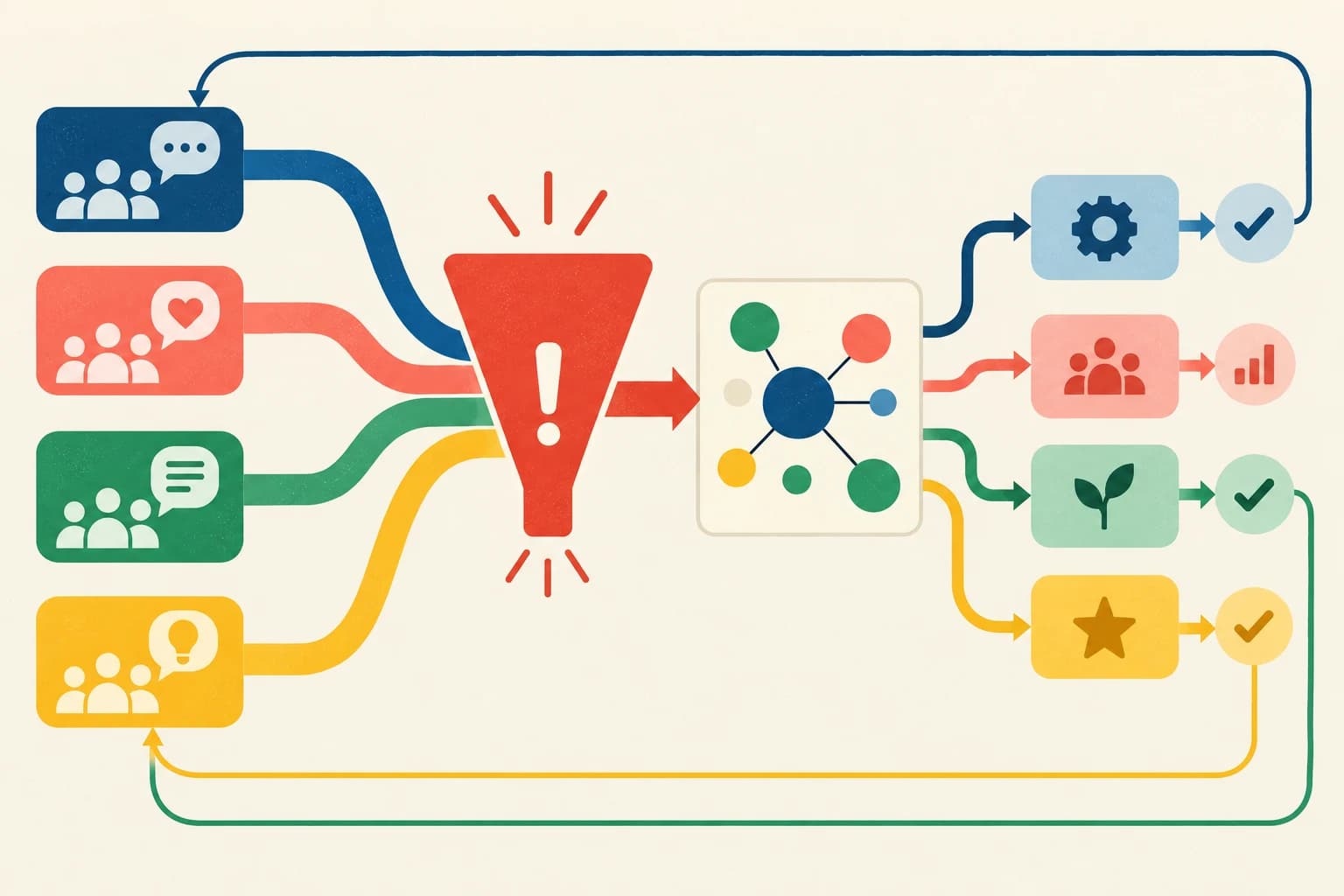
Create a visible place for unresolved questions with an owner and a date or event that will force an answer. Examples include whether a customer can change roles after setup, how often a supplier file will arrive, and what happens when a stock count differs from the source record. An open question should not be buried in meeting notes where delivery staff may never see it. Label assumptions as assumptions and say what would change if one proves false.
For a question about file frequency, the team may proceed with a one-time sample while holding off on automating a recurring import. That is a deliberate branch. If the actual process requires nightly updates, delivery can revisit the design before training. By contrast, silently assuming a daily file can produce costly rework. Keep the open-question list short enough to review in each handoff conversation; archive resolved items so current uncertainty remains visible.
Run the handoff as a conversation
Sales should walk delivery through the map with space for correction. Ask delivery to explain the customer’s goal, commitments, dependencies, and first milestone in their own words. This catches missing context before the customer is asked to repeat themselves. Invite the customer-facing owner to clarify any ambiguity directly with the customer, especially around a commitment. The handoff should not become a one-way file transfer that assumes the receiving team has inferred every nuance.
After the conversation, assign ownership for the next customer contact and state what that person will say. A warm transition may include introductions, but it still needs a clear reason and action. Check whether the handoff artifact is stored in the approved system and accessible to the delivery roles that need it. Review difficult launches for patterns: repeated expectation mismatches may indicate a sales qualification gap, unclear product boundaries, or a missing question in the handoff process.
Use Autodiagram to show the customer goal alongside commitments, dependencies, and the first delivery milestone. Keep account-specific records protected, then export an SVG for the kickoff.