Find the learners’ starting point
Complex material feels harder when instruction assumes everyone has the same background. Begin by identifying what learners already know, what language they use, and where misconceptions tend to appear. A short diagnostic question or an opening example can reveal those starting points without turning the lesson into a high-pressure test. Use the answers to decide which concepts need a bridge and which details can wait for a later session.
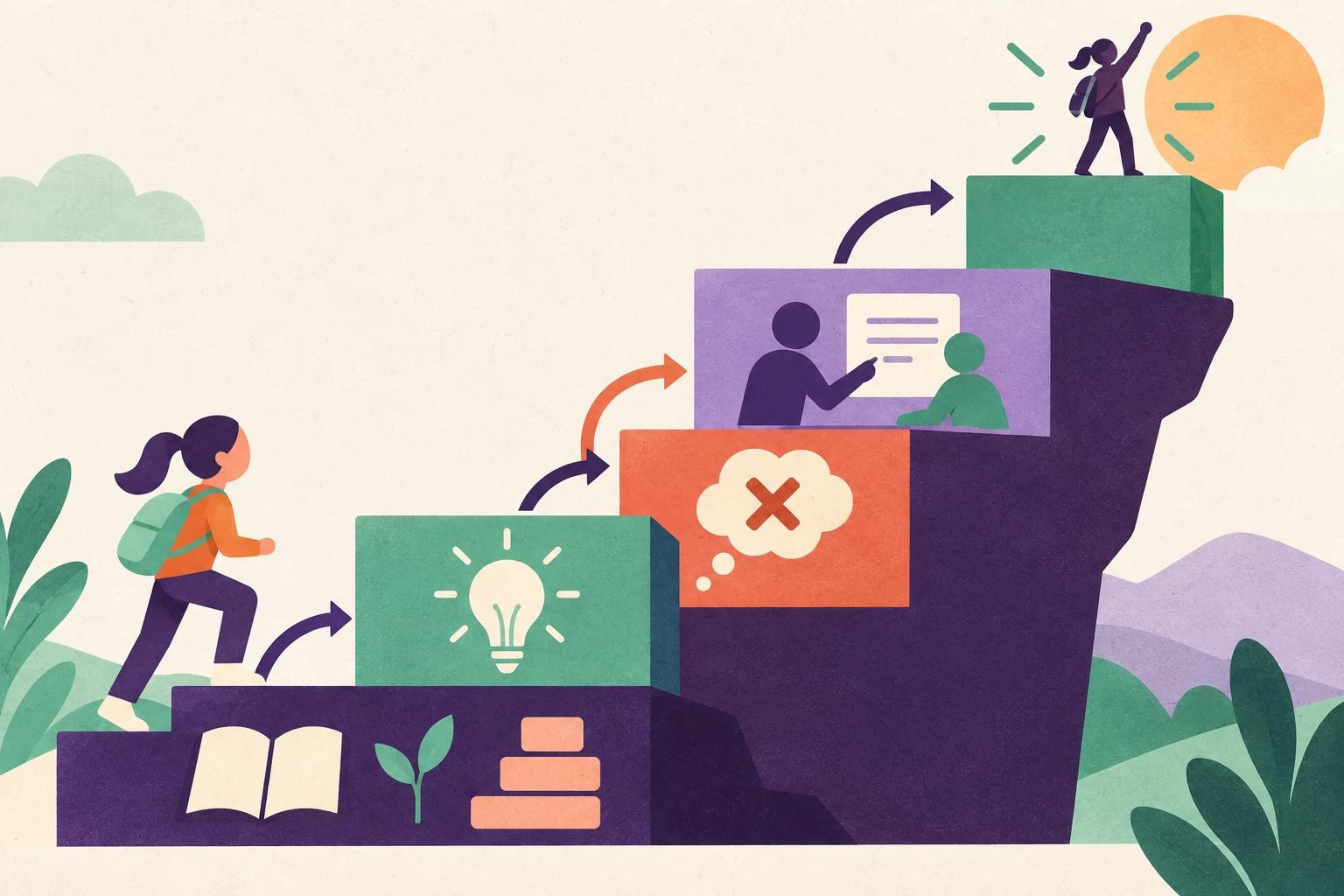
For a lesson on how web requests move through a service, learners may understand a browser and a database but not the role of an API boundary. Start with a familiar action—opening an order page—and ask what must happen between the click and the rendered result. Their explanations expose gaps in sequence and ownership. The teaching map can show those familiar anchors leading toward new ideas, so learners understand why each concept appears when it does.
Organize concepts around a guiding question
A lesson is easier to follow when each section contributes to a question learners care about. “What happens after a user submits an order?” can organize request validation, service logic, storage, and response behavior. Put the central question near the beginning and show how smaller questions build toward an answer. This gives learners a route through terminology and helps the instructor decide which details would distract from the central explanation.
Avoid reducing every topic to a tidy sequence if the real concept has feedback loops or competing causes. The teaching map should preserve relationships that matter for understanding, even if the diagram is less symmetrical. For the order example, a failed validation may return immediately, while a payment service can respond asynchronously. Showing these paths helps learners see that one mental model can contain several timing patterns. Explain the simplification and point to the fuller reference for production-specific behavior.
Pair explanation with worked examples
Introduce a concept, then show how it operates in a specific case. A worked example makes hidden reasoning visible: what information enters, what choice is made, what changes, and what result follows. Choose an example that contains the concept but does not overload the learner with unrelated complexity. Narrate the decision, not just the answer. If a step can be mistaken for a rule that always applies, mark the conditions under which the example is valid.
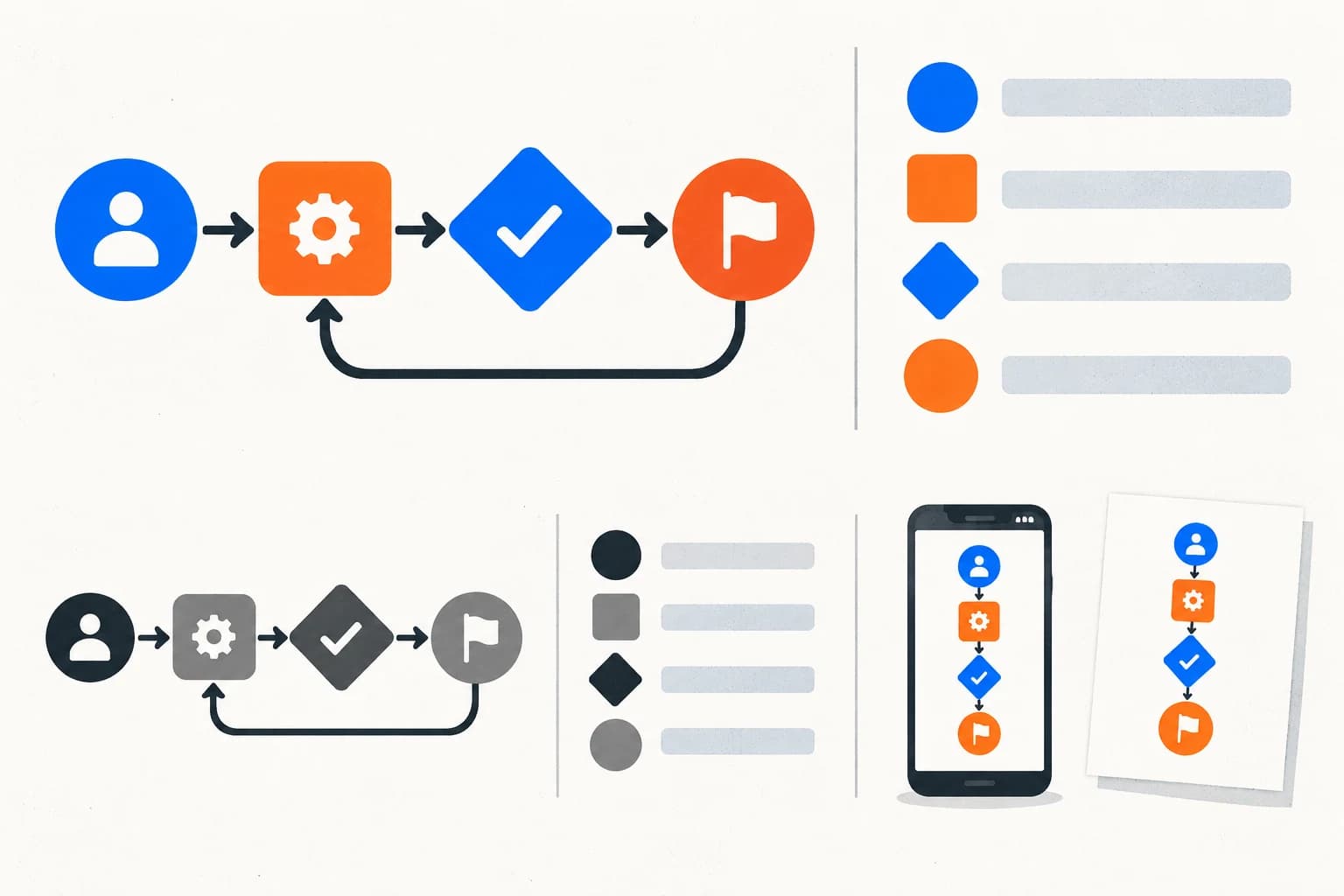
In the order request, show a missing address field first. The service rejects the request and returns a clear correction message; no order record is created. Then contrast that with a valid request that creates a pending order while payment is processed. Learners can compare the paths and notice why validation and payment are separate concerns. Use labels that match the lesson’s vocabulary. A visual example should clarify the explanation rather than invite learners to decode unfamiliar icons or decorative notation.
Move from guided practice to independent reasoning
After the instructor demonstrates, ask learners to solve a nearby problem with some support, then try a different case independently. Gradually remove hints so the exercise tests understanding rather than copying. Include a question that asks learners to justify their route or identify what information they would need. A correct outcome reached by guessing does not show that someone can apply the idea when surface details change.
For practice, give learners an order with a valid address but a declined payment. Ask what should be persisted, what the user should see, and which system needs to act next. Then introduce a delayed payment response and compare the answer. Discuss where learners disagree and why. The instructor can use a quick check to identify whether to revisit the concept or move forward. Make room for incorrect attempts; they reveal what the learner believes and provide a concrete point for feedback.
Make misconceptions part of the route
Common misconceptions should be addressed at the moment they become tempting. If learners assume every request completes immediately, show the delayed response case before that assumption hardens. Put the misconception beside the counterexample and explain what evidence distinguishes them. Avoid presenting a list of “things not to do” without a reason. Learners need a replacement model they can use, not merely a warning that their first model was wrong.
A useful classroom exchange might begin with, “If the payment takes longer, should the page wait?” Let learners propose approaches, then compare user experience, reliability, and operational constraints. The answer may depend on the system and product requirements, so avoid treating one implementation as a law of nature. The teaching map can show the tradeoff and the context that informs it. This supports judgment and makes learners more likely to recognize when a familiar example does not apply.
Connect the lesson to work learners will do
A learner should leave knowing where the idea appears in their own work and what help is available when applying it. Provide a small transfer task, a reference, and a route to ask questions. If the topic is a prerequisite for a real responsibility, coordinate with a manager or mentor so learners can practice safely. Instruction alone cannot overcome missing permissions, a broken development environment, or contradictory local conventions.
After the request-flow lesson, learners could trace one endpoint in a sample service and annotate where validation, persistence, and response handling occur. A reviewer can ask them to explain one failure path. The transfer task is narrow enough to complete yet close enough to real work to make the lesson stick. If the production service differs from the example, point out those differences rather than letting the simplified model become an inaccurate map of the codebase.
Use evidence to revise the lesson
Collect evidence that reflects learning, such as how learners approach a new case, which question they ask, or where they revise their answer. Avoid treating a favorable survey as proof that the lesson improved performance. Look for patterns across exercises and follow up when someone is blocked by a prerequisite. Ask instructors to report where timing or explanation failed, not only whether they completed all slides.
Revise the lesson when a recurring misconception persists or an example distracts from the core idea. Remove material that does not help learners answer the guiding question. If learners can explain the concept in class but cannot use it later, improve the transfer support or arrange more practice. Keep the teaching map dated and owned because tools and terminology change. A lesson becomes clearer through attention to how people actually learn, not by adding every fact an expert knows.
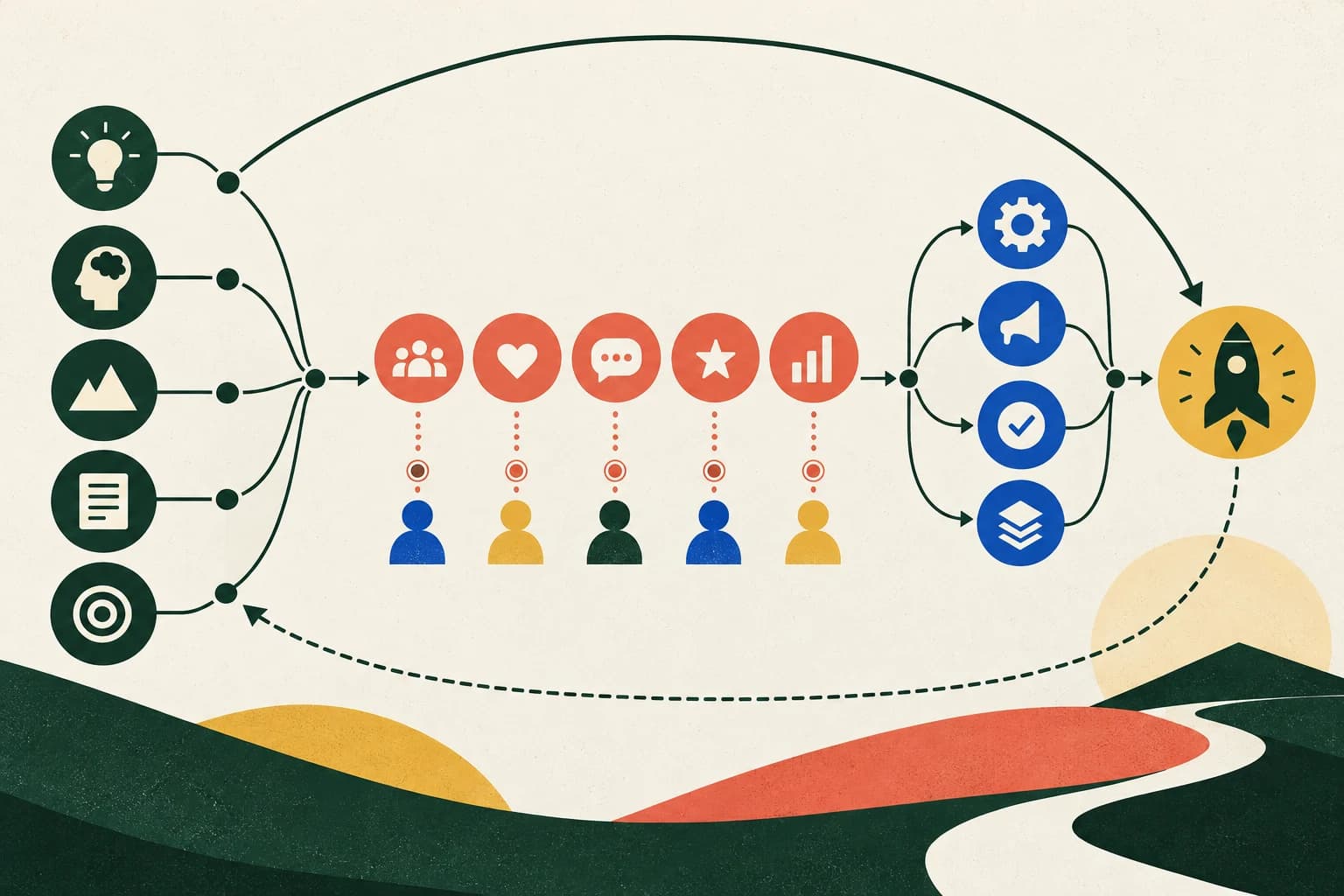
Autodiagram can turn a guiding question into a branched lesson map, with prior knowledge, worked examples, practice, and transfer. Edit concept labels in the canvas and export an SVG for course materials.