Why the distinction matters
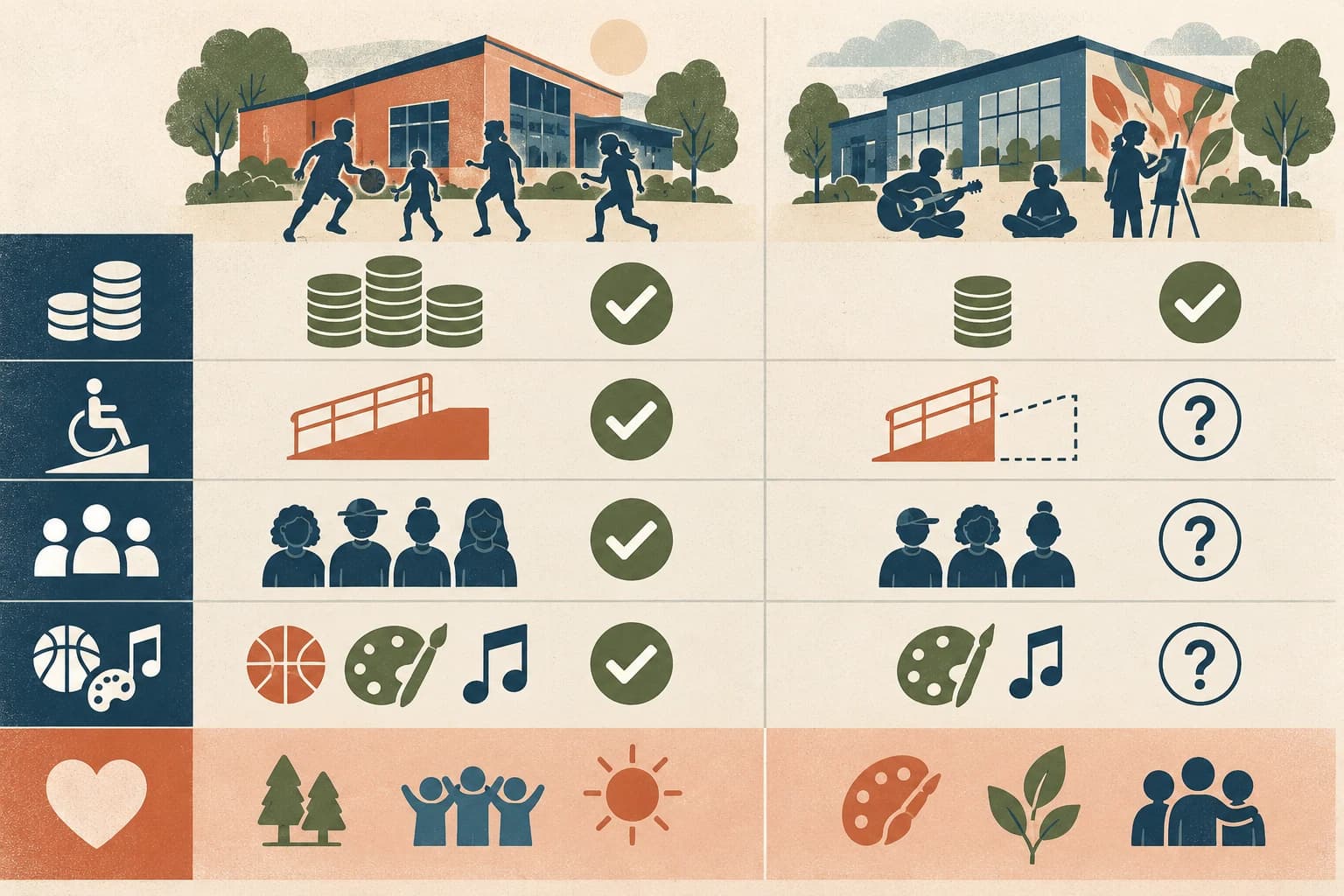
Two proposals for a youth program may include confirmed costs, access details, and staffing plans alongside preferences about tone, activity style, or community identity. If all information appears as equally certain facts, a committee may mistake one person’s preference for a requirement. A comparison should show what is known, what is missing, and what value judgment remains.
Set up separate visual cues: verified information, open questions, and priorities. Use textual labels or a legend rather than color alone. The committee can then discuss whether a proposal meets a confirmed constraint before debating which experience it prefers. This order prevents a persuasive presentation style from outweighing material evidence unintentionally.
Gather evidence with a common standard
For both proposals, verify cost using the same basis: staffing hours, supplies, venue needs, and any follow-up support. Check accessibility using specific information about the site, schedule, and activity format. Ask each proposer the same questions and record the source and date of key facts. An uneven evidence standard makes a side-by-side chart look fair while quietly favoring one option.
Leave a cell blank only when the information truly does not apply, and label it “not applicable.” Use “not yet confirmed” for missing evidence. These states lead to different actions. A committee may request clarification before choosing, or accept a known limitation. Distinguishing them makes uncertainty part of the decision rather than an afterthought.
Represent preferences without disguising them
The committee may value a hands-on activity over a lecture, or prefer a welcoming informal tone. Those are legitimate priorities, but they should be described as priorities. A notes column can explain whose experience matters and why. Avoid turning “we like it” into an unqualified score that appears to measure program quality objectively.
Ask participants to rank priorities before they see a total score. If one group emphasizes broad reach and another emphasizes deep mentorship, the difference is substantive. A matrix can make those values visible and invite discussion about the program’s purpose. It cannot resolve competing values through arithmetic unless the committee has openly agreed on how the weights reflect its goals.
Walk through a close comparison
Proposal A costs less and can serve more participants, but its outdoor activity depends on weather and has limited quiet space. Proposal B costs more, has smaller groups, and includes a structured mentoring hour. The committee should inspect whether costs use the same staffing assumptions, ask about indoor alternatives, and clarify how mentors are prepared.
Once those facts are confirmed, the remaining choice may depend on the program’s aim. If the goal is reach, A may fit; if sustained guidance is central, B may fit. State that condition in the recommendation. A conditional conclusion respects the evidence and helps future reviewers understand which priority drove the decision.
Avoid visual rankings that overstate confidence
A star rating, traffic light, or total score can imply precision beyond the underlying information. If the committee uses such devices, publish the definitions and show the evidence behind each rating. Mark low-confidence assessments clearly. A visually bold green cell should not conceal that the information came from an unverified assumption.
Consider an evidence table with a separate priority discussion instead of a single ranking. This keeps factual checks from competing with preferences in the same scale. If the group still needs a recommendation, summarize the decisive conditions and unresolved risks in a short note. The goal is a transparent rationale, not a numerical winner that no one can explain.
Document what would change the choice
Record which unknowns must be resolved before funding or announcement. If Proposal A’s indoor alternative is confirmed, it may become the preferred option; if not, the committee may select B. This creates a clear follow-up path and avoids reopening the full debate without new evidence.
After the program runs, compare planned and actual costs, participation, and experience. Keep those results separate from initial preference so the committee can learn without rewriting its past reasoning. A comparison that distinguishes evidence from values gives stakeholders a more honest way to disagree, refine priorities, and explain a decision to the people affected.
Use Autodiagram to organize the two youth-program proposals under the same criteria, then edit notes to distinguish verified facts, open questions, and stakeholder priorities. A comparison layout makes the structure easy to scan, but keep the decision rationale explicit in text. Export PNG or SVG for the committee packet with evidence sources nearby.