Capture the situation behind the request
A feature request is often a proposed solution to a situation the team has not yet understood. Capture what the customer was trying to accomplish, where the current workflow failed, how often the situation arises for them, and what they did instead. Keep the customer’s words where useful, but distinguish a direct quote from an internal summary. Record enough context to follow up without copying sensitive details unnecessarily.
A customer may request a “bulk close” action after reviewing many completed support cases. The underlying issue could be repeated clicks, but it could also be that the status model does not match how their team works. Ask what they closed, why, and what happened afterward. That context helps product compare possible responses. A solution request still matters; the feedback loop simply preserves the need underneath it so the team does not mistake the first suggestion for the only valid design.
Route feedback by urgency and ownership
Not every comment belongs in the same queue. A suspected safety issue, data loss, or service interruption may need an immediate response path. A usability complaint may belong in research or product triage. A request tied to a contractual commitment may need a commercial owner. Define observable routing criteria and give frontline staff a way to handle uncertain cases. Never make a high-impact report wait for a routine feature-review meeting.
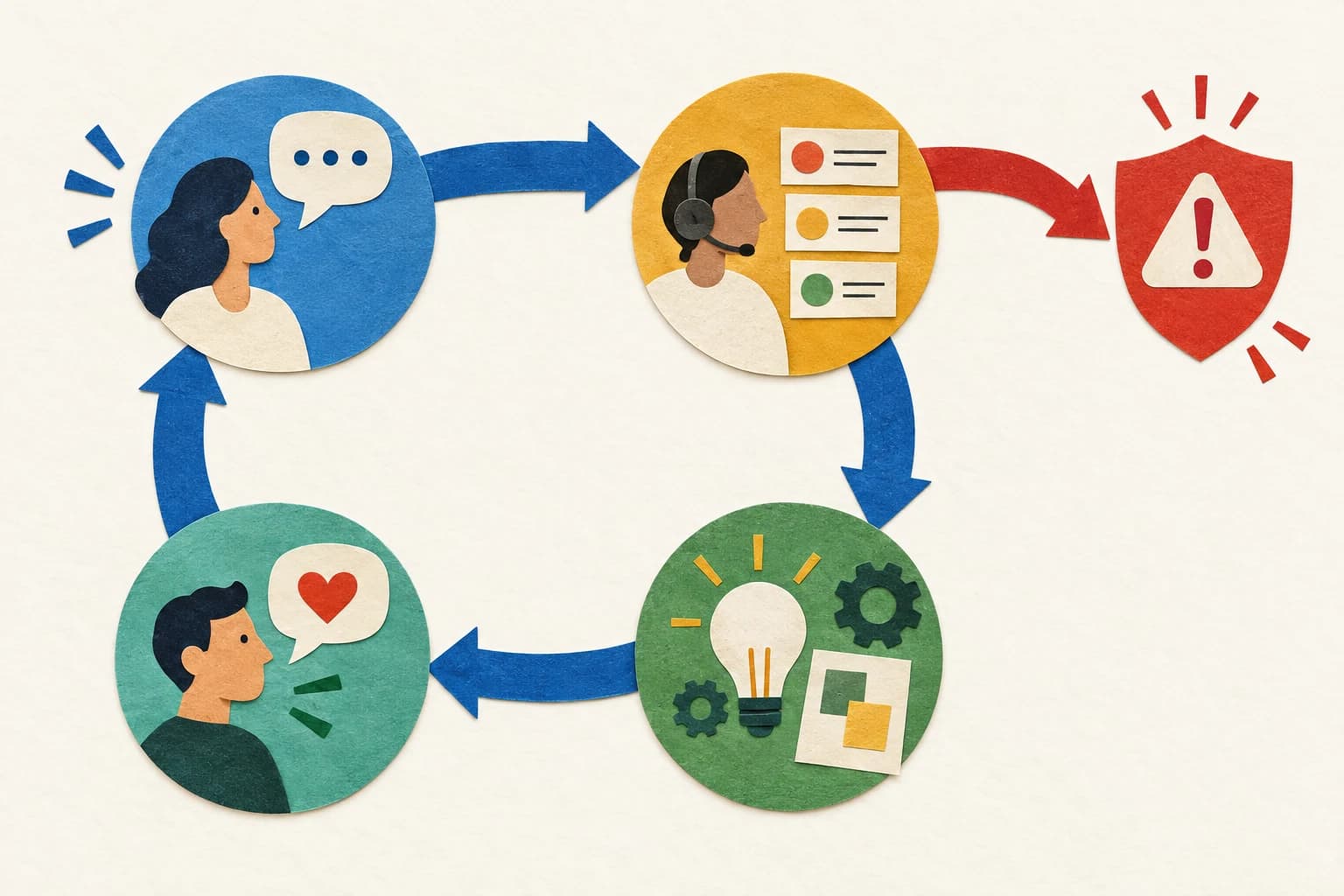
For the bulk-close request, support can log the workflow and check whether cases are being altered incorrectly. If the customer reports data loss, the issue takes an operational escalation route. If the behavior is inconvenient but safe, product triage can gather similar examples. The intake map should show these paths and who owns customer communication in each. This prevents the customer from being asked to repeat the same story while internal teams debate which inbox should receive it.
Look for patterns without erasing distinct needs
Grouping feedback can expose repeated friction, but a cluster should not flatten important differences. Tag the audience, task, context, and workaround where possible. Two customers may ask for the same control for different reasons, or use different words for one underlying need. Keep a link to the original case so researchers can inspect context before making a broad claim. Avoid treating the number of tickets as a direct measure of how many customers share a problem.
Several teams asking for bulk close might include one group clearing test records and another completing a regulated review. The feature implications and risk differ. A tag for task context helps product discover that distinction. Support can still report the visible volume, while the research note explains its limitations. If intake is biased toward customers who contact support, say so. The team may need interviews or workflow observation to understand people who quietly work around the problem.
Make prioritization reasoning inspectable
When product considers feedback, show the criteria that influence the decision: user impact, strategic fit, frequency, risk, effort, and evidence quality may all matter. The exact criteria belong to the organization. Do not pretend a numeric score turns uncertain judgments into objective truth. Record the reasoning and the people accountable for the decision. It should be possible to explain why an item is deferred without dismissing the customer who raised it.
The team might choose not to build bulk close immediately because the request’s context varies and incorrect closure could harm some workflows. A smaller first step could be improving filters or testing a safer confirmation pattern. If the team declines the feature, note what evidence or product boundary informed that choice and when it could be revisited. This creates a respectful internal record and helps account teams answer consistently. It also avoids resurrecting the same request as though it had never been considered.
Close the communication loop honestly
Customers deserve a response that acknowledges their situation and describes the team’s current state without implying a commitment that does not exist. Acknowledge receipt, ask clarifying questions if needed, and explain whether the idea is under review, planned, declined, or unresolved. Give a next update only when the team can reasonably meet it. If a decision changes, make sure the customer-facing owner hears about it.
For the bulk-close request, the account owner could explain that the product team is examining several case-closing workflows and has not committed to a particular feature. They might offer a safe existing workaround if one is confirmed. Avoid saying “we’ll add this soon” merely to end a difficult conversation. That promise can become a hidden obligation across future renewals. Honest limits preserve credibility and invite customers to share more context without making them responsible for the roadmap.
Feed decisions back into the intake system
A feedback system should make it easy to see what has been decided and whether the source still matters. Link product decisions to the incoming evidence, update status, and assign a person to notify relevant customer-facing teams. If a solution ships, confirm whether it addresses the reported situation; delivery alone does not close the learning loop. If evidence contradicts the original interpretation, preserve the update rather than deleting history.
After testing a safer closing flow, product can ask a few affected teams whether it supports their work and observe where errors or questions remain. Support can then update its guidance. The original request moves from “under review” to a reasoned outcome, with a link to the new behavior. Periodically inspect old requests for changed conditions, but do not reopen every deferred item automatically. The loop is complete when feedback informs a decision and the people who need the answer can find it.
Autodiagram can visualize feedback intake, urgent routing, product review, customer response, and outcome. Keep customer records in their approved system and export the reusable process as SVG.


