A cycle needs a changing input
A circular arrangement does not automatically explain feedback. A useful loop shows how information from one pass changes a later pass. For volunteer training, the sequence might be: teach a task, observe where participants hesitate, group their questions, revise the examples, and teach the updated session. The feedback is the mechanism that carries learning into the next round.
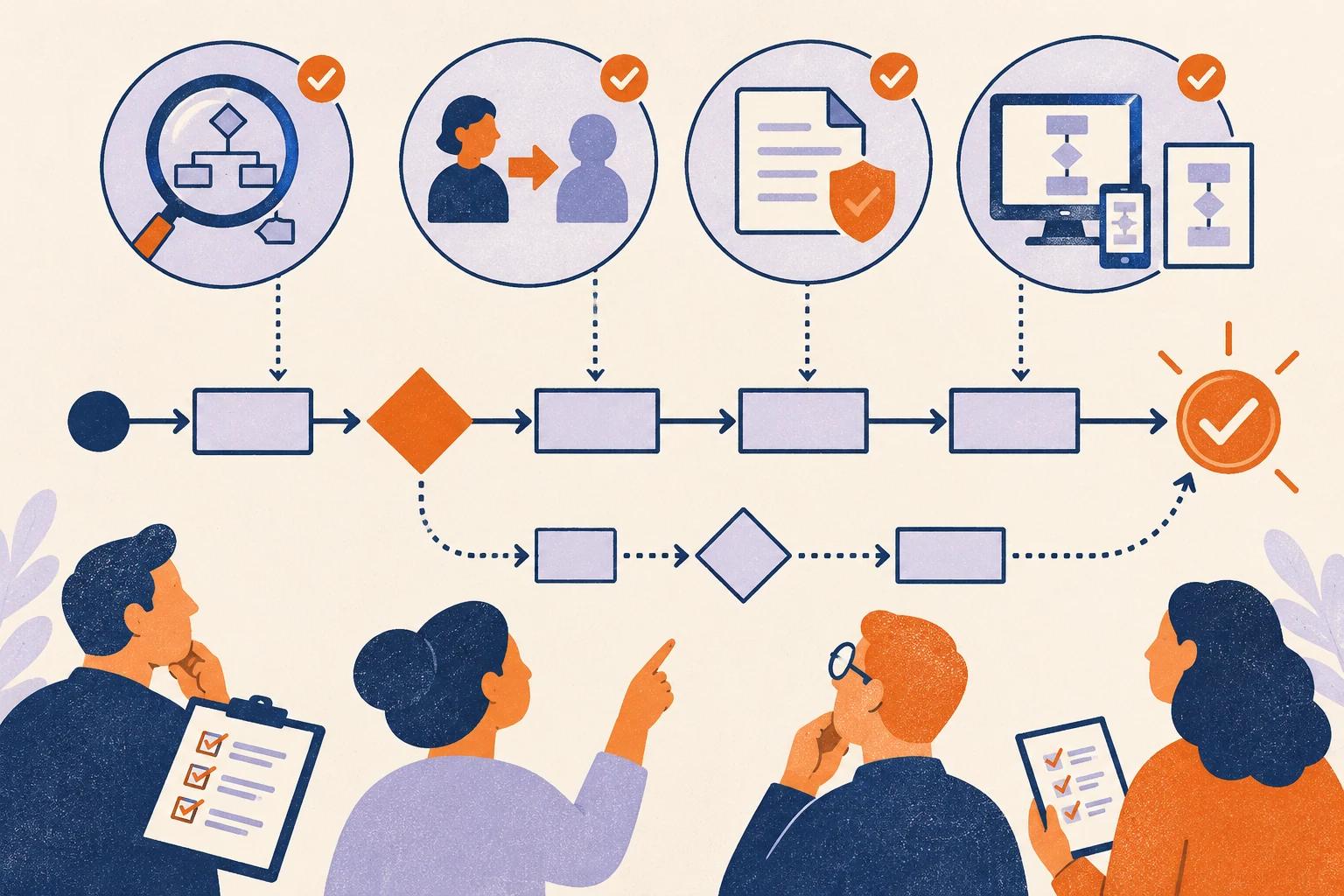
Start with the decision the loop supports. The training lead wants to know which parts of the lesson need revision before the next group. That focus rules out unrelated metrics such as attendance unless they affect the content decision. Write down the input, activity, observation, interpretation, and adjustment before choosing a circular layout.
Separate observation from interpretation
During a session, record observable behavior: several volunteers pause before labeling a safety issue, or ask where to find the checklist. Then interpret cautiously. The group may be confused by a term, unable to see the checklist, or hesitant to interrupt. A loop should not jump directly from one observation to a single cause without checking.
Use two distinct nodes—“collect questions and pauses” and “identify recurring friction”—so the map shows that someone reviews evidence. A training lead may compare notes from multiple sessions and ask a volunteer what felt unclear. This step makes the feedback process more credible than a direct arrow from “participant asks” to “rewrite lesson.”
Make the adjustment explicit
The next stage names a change: replace an abstract instruction with a worked example, move the checklist link earlier, or add a practice round for a difficult decision. A box labeled “improve training” is too broad to guide anyone. State the specific edit and who owns it, especially when materials and delivery are managed by different people.
Then show what returns to the next session. If the example changes, the facilitator uses the revised version; if the checklist location changes, the participant should be able to find it. The loop closes when the adjustment reaches the activity and can be observed. A cycle that ends at “ideas collected” is a survey process, not a learning feedback loop.
Decide what counts as useful feedback
Not every question indicates a lesson defect. A question may be personal to one participant, reflect a rare case, or reveal a genuinely missing step. Define a review rule: repeated confusion prompts a revision; a safety concern gets reviewed immediately; an isolated specialized issue may receive a linked reference. These distinctions keep the loop from rewriting training after every comment.
Avoid reducing feedback to a numeric satisfaction score. A score can signal a trend, but it does not explain what to change. Pair it with a prompt about the moment that was hardest to follow and a place for facilitators to note where time ran short. The diagram should show the information used to make an adjustment, not imply that one measure tells the whole story.
Choose cadence and ownership
A feedback loop needs a rhythm. If the training runs weekly, the lead may review patterns after each session; if it runs quarterly, a monthly review may suffice. Show the review point and the person responsible. Without cadence, observations accumulate in notes while the next session repeats the same problems.
Name a condition for when to revise the lesson and when to preserve it. A change to safety policy may require immediate correction; a wording improvement can wait for the next planned update. This difference helps participants trust that serious concerns are acted on while the material remains stable enough for facilitators to use consistently.
Test whether the loop actually closes
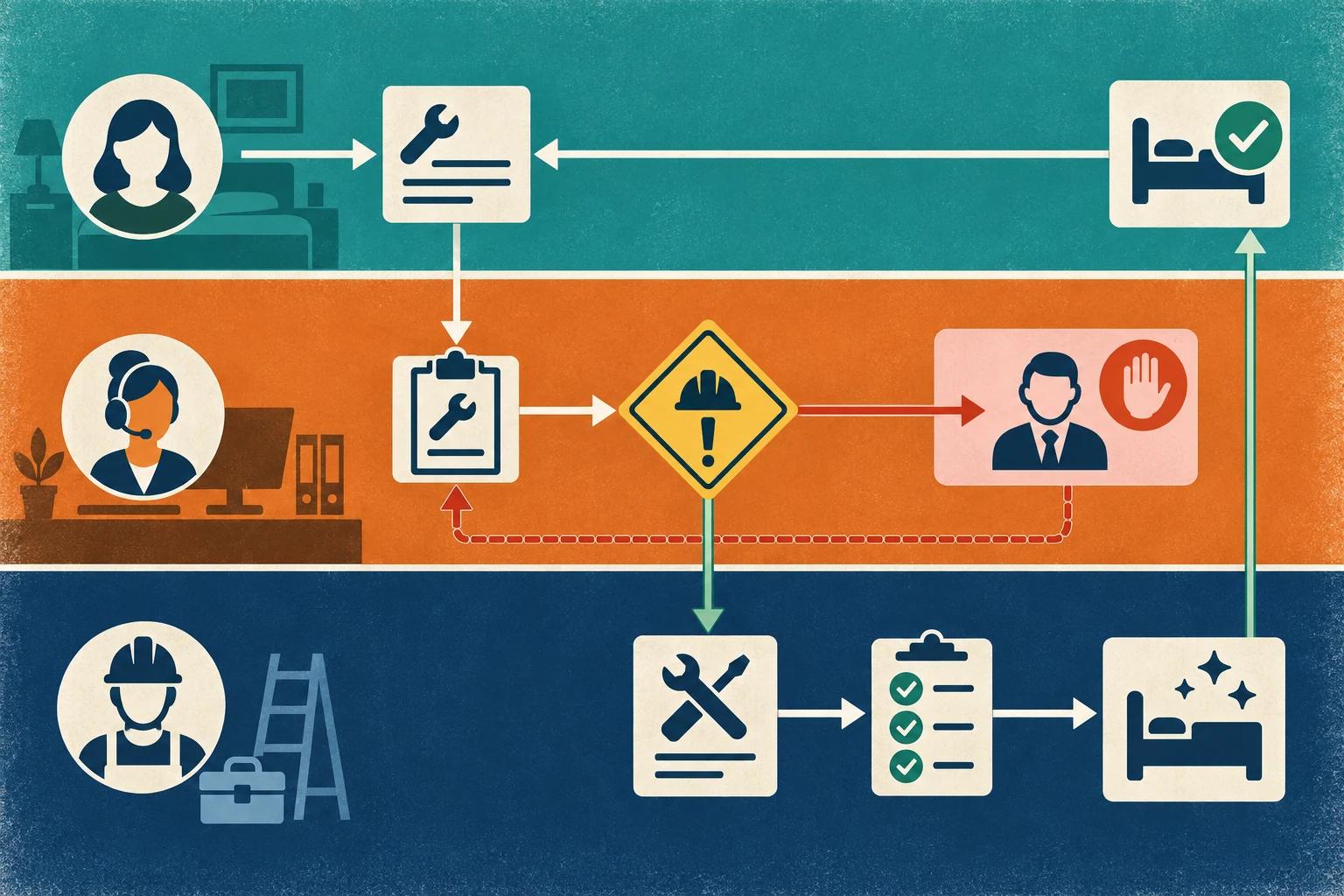
Trace a participant’s question through the diagram: where is it recorded, who reviews it, how does a decision get made, and where does the resulting edit appear? If the question disappears into a box called “feedback,” add the missing handoff. Trace a second case that does not lead to a change and show how that decision is recorded.
After revising the training, look for the same hesitation in the next session. Its absence does not prove the edit caused improvement, but it provides a useful observation; its persistence suggests another explanation. Update the map when ownership or cadence changes. The cycle should describe a practical learning routine, not a decorative loop that makes the process appear self-correcting without anyone doing the review.
Write the training cycle in Autodiagram from teaching through observation, revision, and the next session; choose a cycle layout that makes the return from revised examples visible. Edit the nodes to distinguish observed questions from interpretations. Adjust the visual style for facilitator use, then export PNG or SVG so the process can accompany the training materials.