Do not disguise missing evidence as a no
A yes-or-no tree can create false certainty when a reviewer has not found the evidence. Before publishing an announcement, a team may know the event date but still be waiting for a partner’s confirmation. Treating that unanswered question as “no” can send a draft forward as if the fact were settled.
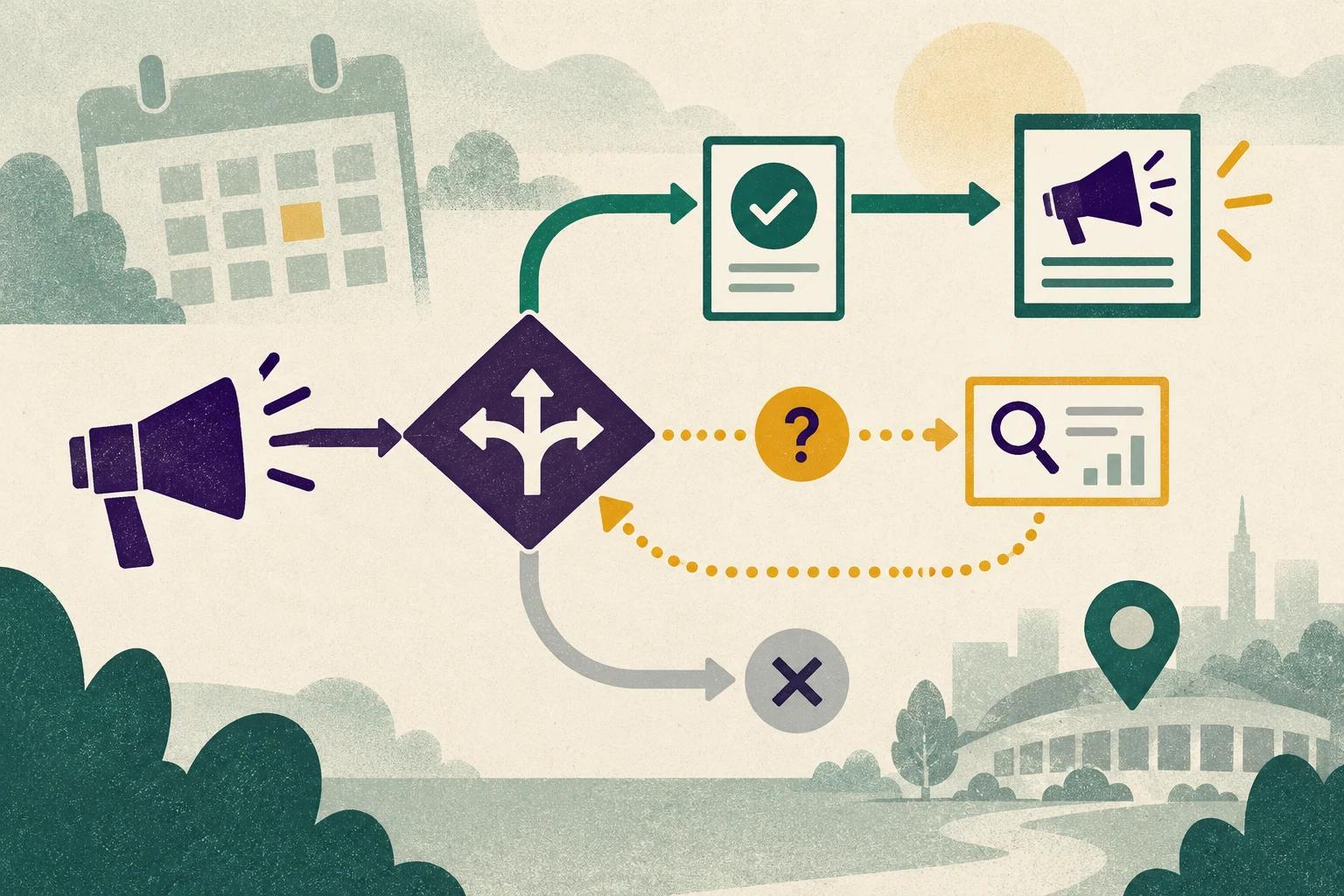
Add an explicit unknown state when the missing information changes what the team should do. “Is the date confirmed by the venue?” can lead to yes, no, or “confirmation pending.” The pending path should name who will obtain the answer and what work can safely continue meanwhile. That distinction keeps uncertainty visible without stopping unrelated drafting work.
Separate unknown from not applicable
Unknown means the fact matters but has not been established. Not applicable means the question does not fit this situation. A public announcement may have a partner approval requirement for co-hosted events, but no partner exists for a solo event. Those cases should not share a route just because neither produces a yes answer.
Use a short note or a separate branch when this distinction affects approval. In the example, a co-hosted event with approval pending remains in draft review; a solo event can bypass the partner check. Make the condition explicit so readers do not interpret “no partner response” as “no partner involved.” Small wording differences prevent consequential routing errors.
Design a safe path while the answer is pending
For a draft announcement, identify what can proceed without the unresolved fact. The writer might polish general copy and prepare a layout, while publication remains blocked. Show both states: continue reversible preparation, hold final release. This avoids the two common responses to uncertainty—doing nothing at all or proceeding as if a guess were confirmed.
Name the owner and follow-up trigger. “Communications lead requests venue confirmation; review again when reply arrives” is clearer than “wait.” If a deadline is approaching, the owner can escalate or choose an approved fallback, such as omitting the unconfirmed detail. The tree should link to the person authorized to make that choice rather than inventing a contingency rule.
Walk a draft through the three states
Suppose the announcement includes the venue address, event time, and a statement that registration is open. The venue has confirmed the location but not the time. The tree routes the draft to “hold time-specific copy; ask venue contact,” while the registration statement can still be checked independently. When confirmation arrives, the time branch returns to review.
Now consider a venue that says the event cannot be held there. That is not unknown; it is a no with a different consequence. The team should remove the venue claim, choose an alternate location, or delay publication according to its authority. Drawing the negative route separately from pending evidence makes the work and accountability visible to everyone reviewing the draft.
Avoid endless clarification loops
A clarification branch needs a way to end. State what happens if an answer does not arrive by the decision deadline, using the team’s real policy. The options might be to publish without the detail, postpone the announcement, or ask a decision owner to resolve the tradeoff. Do not create a deadline in the diagram unless the team has agreed to maintain it.
If the source is disputed, show the evidence standard: a written venue confirmation, approved schedule, or named event owner. A tree cannot solve disagreements about truth by adding more arrows. It can show which role resolves the dispute and what record they use. If that authority is unsettled, flag it as a governance question before treating the tree as complete.
Keep the visual honest as facts change
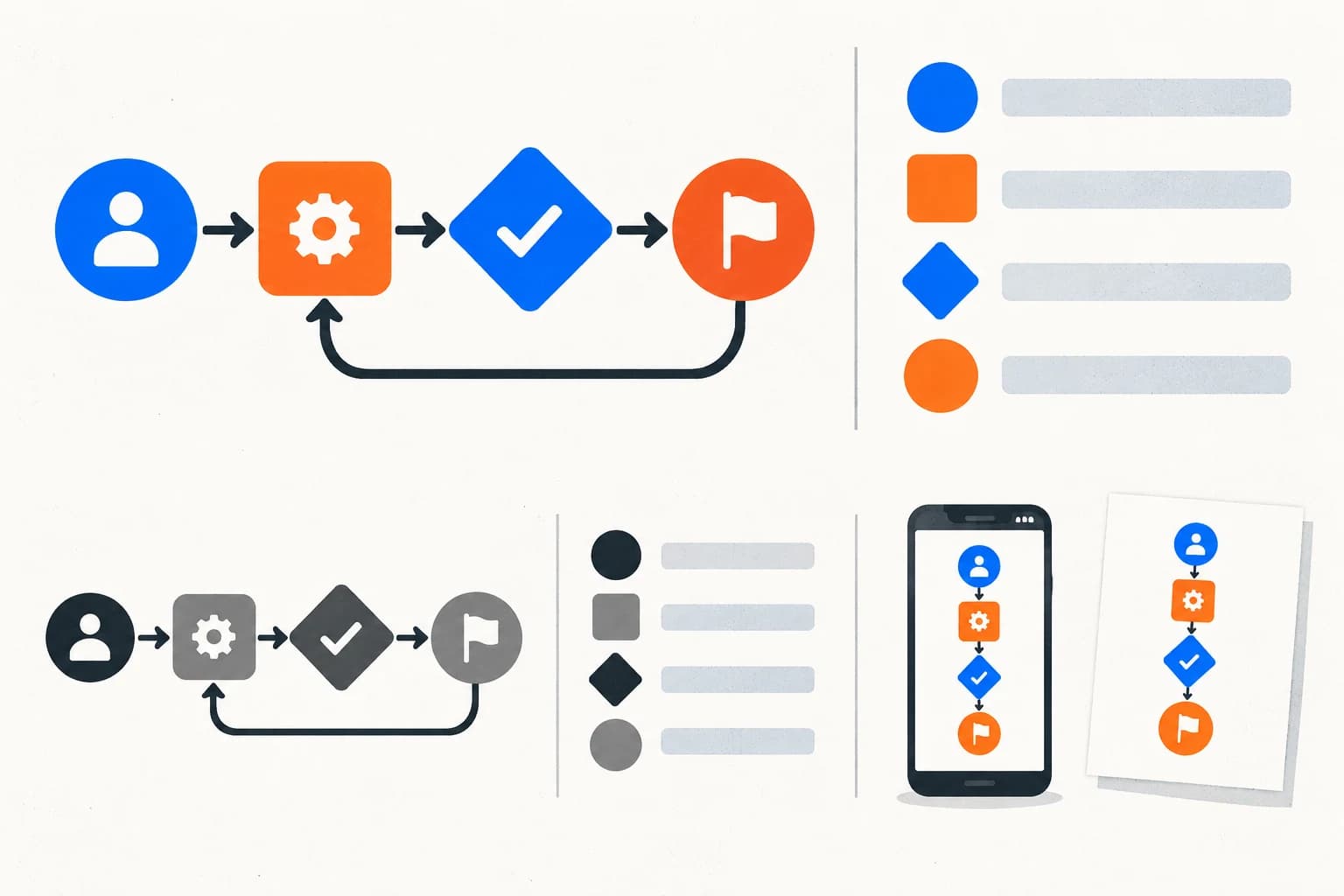
Use text labels such as “confirmed,” “pending,” and “not applicable” instead of relying on green, amber, and gray alone. The reader should understand the branch in a monochrome printout or when colors render differently. If the diagram is used during a live review, place the unresolved facts close to the decision so that the status cannot be mistaken for a permanent rule.
After the announcement is published, uncertainty changes into a record of what was confirmed and when. The tree need not become an archive, but its owner can update the source guidance if the process changes. Ask a new reviewer to trace a confirmed draft, a pending co-host response, and an inapplicable approval requirement. If they distinguish the routes without coaching, the uncertainty model is doing its job.
Represent “confirmed,” “pending,” and “not applicable” as distinct text branches in an Autodiagram outline. Choose a process layout that gives the pending route space to show its owner and return point. Edit the labels as venue facts change, then export a fresh PNG or SVG for the announcement review; the diagram remains an editable draft in the workspace.