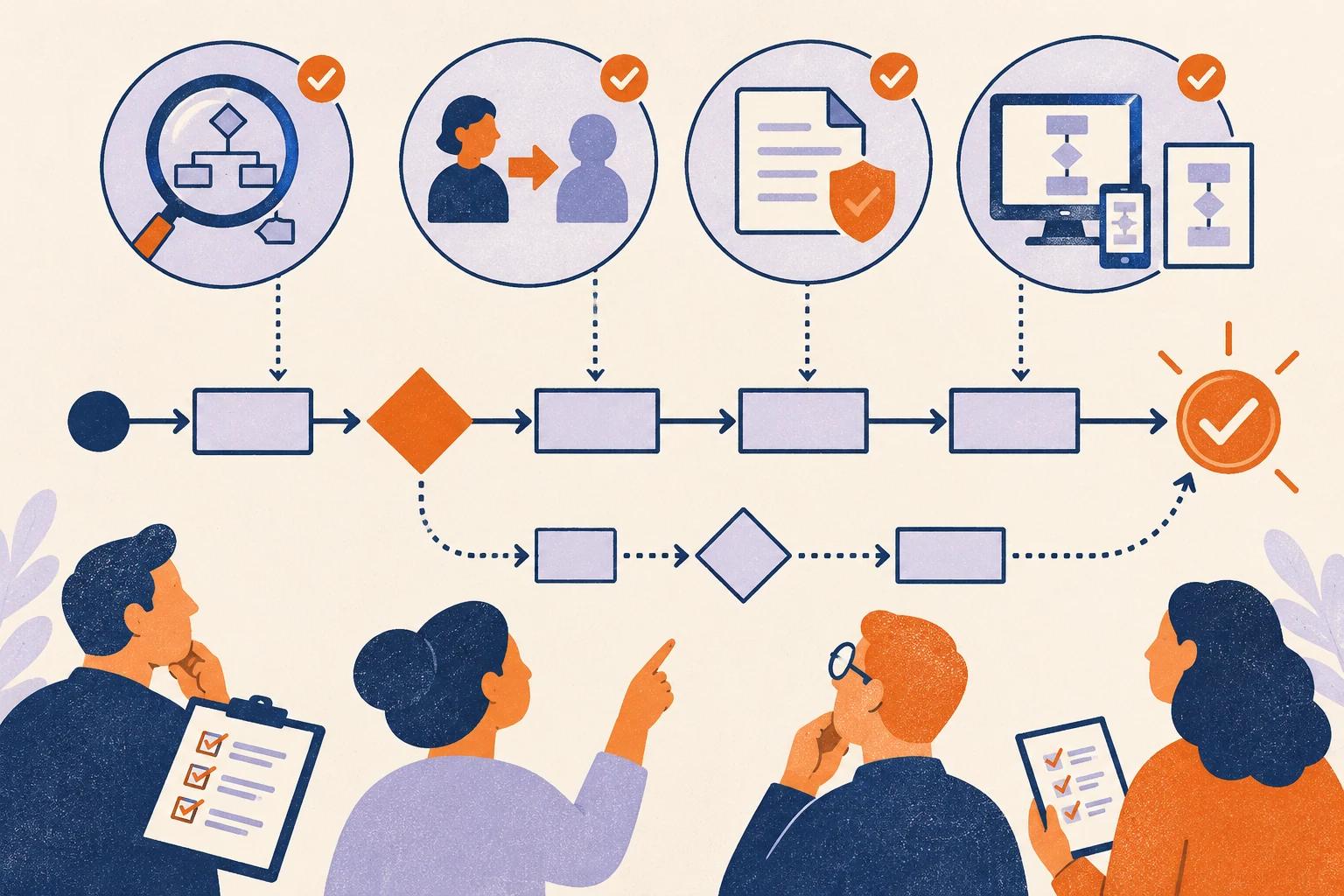
Map the deliverable back to its prerequisites
A poster deadline is not a sequence of equally independent tasks. Printing requires an approved file; approval requires a reviewed draft; charts depend on checked analysis; venue planning can happen in parallel. Begin with the deliverable and ask what must be complete immediately before it. This backward pass surfaces dependencies that a simple date list misses.
Write the final milestone as “print-ready poster approved,” not merely “poster.” Then identify who accepts it and what they inspect. The deliverable may need citation checks, readable labels, and a print-size proof. If these conditions are not explicit, the team may reach the date with a file that exists but cannot be sent to the printer.
Separate work that can overlap
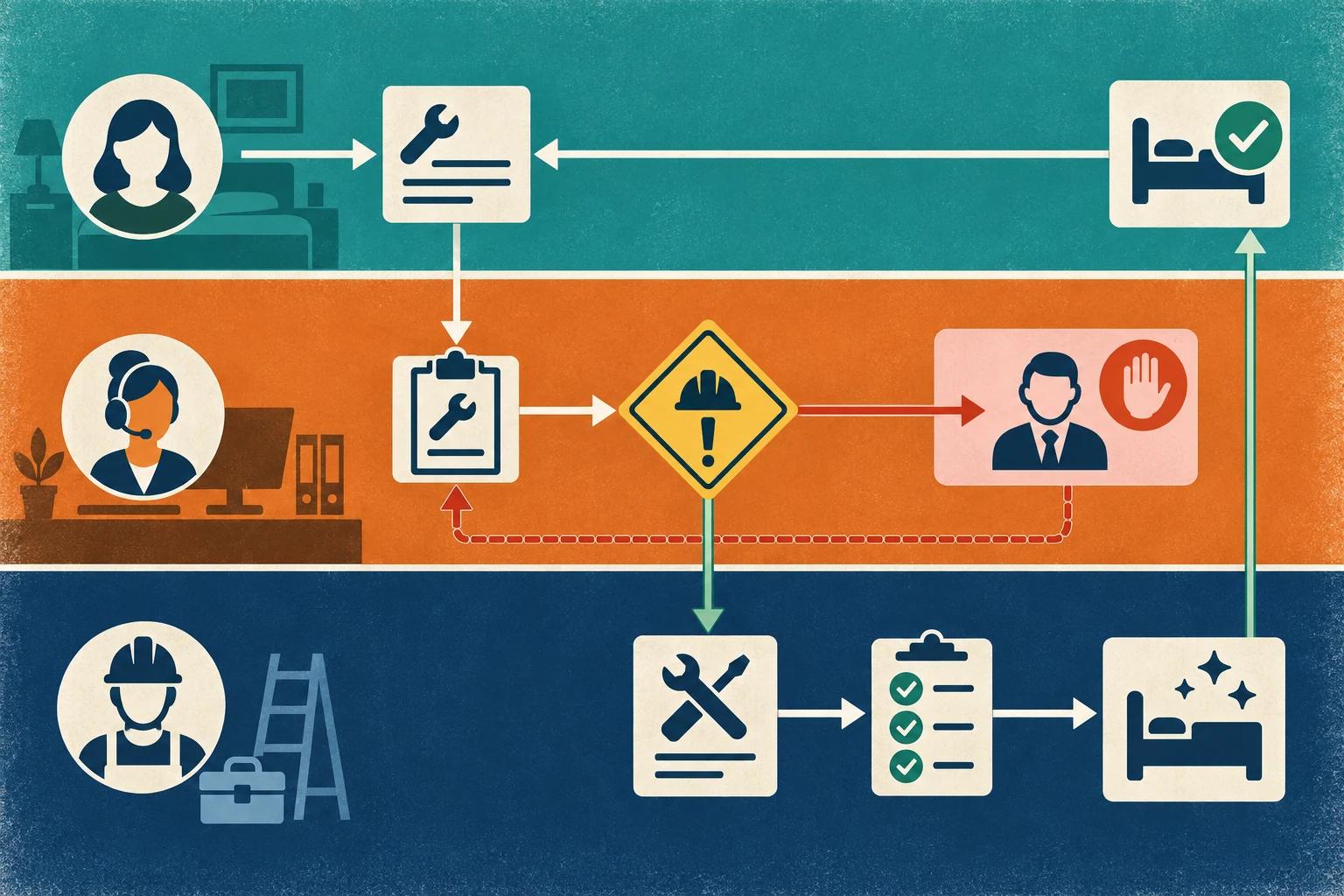
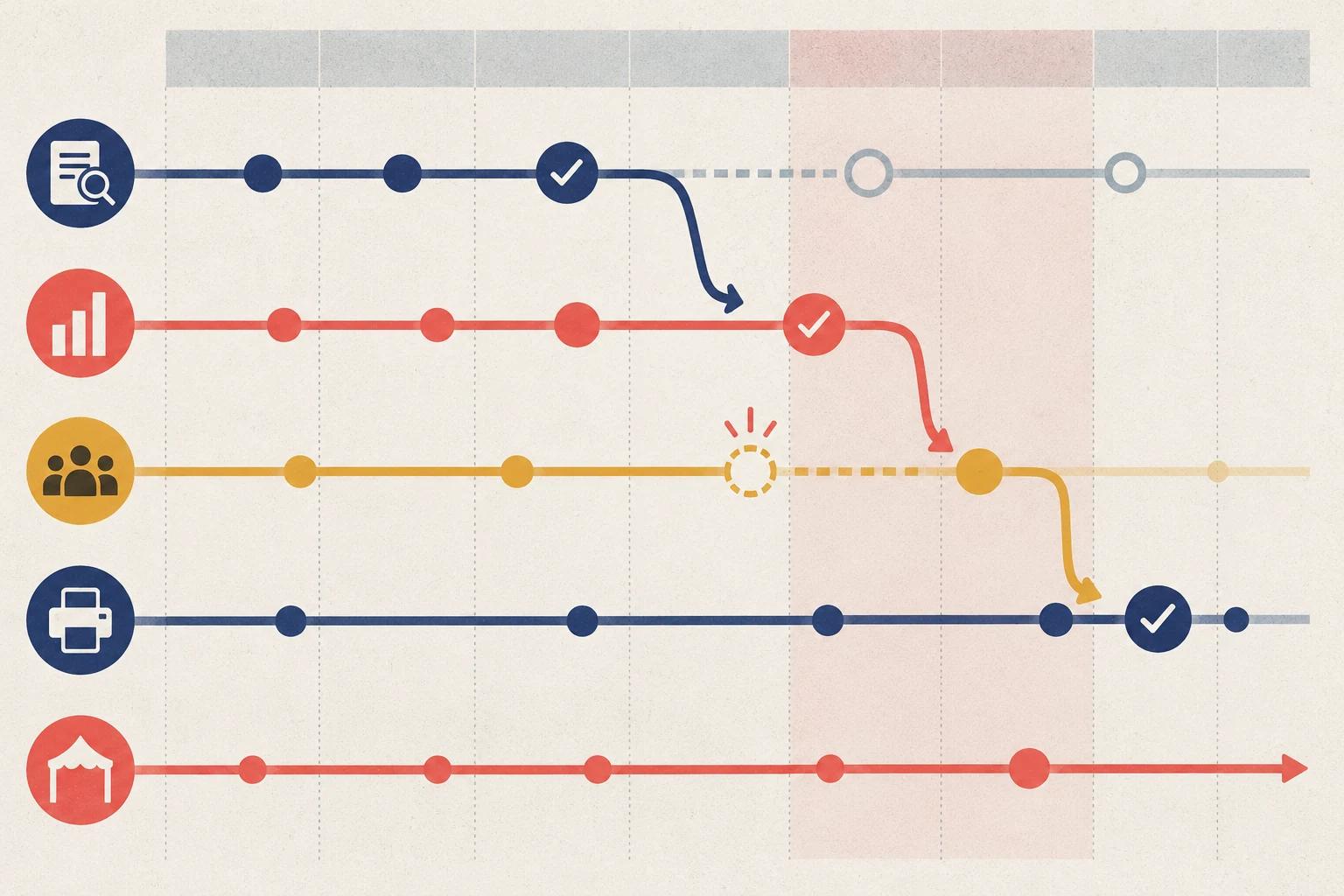
Build lanes for research, analysis, design, review, and logistics. Source checking can continue while the venue is confirmed; print quotes can be gathered before the final artwork exists. A lane layout makes these parallel activities visible without suggesting that one must wait for the other. It also helps a coordinator see where the team has work available during a blocked period.
Avoid treating every task as parallel. Charts that depend on cleaned data cannot be finalized before data validation. The poster draft can use placeholders, but label them as provisional so readers do not mistake them for final values. The timeline should distinguish work that can safely proceed from work that risks expensive rework if it starts too early.
Draw links between dependencies
Connect “analysis checked” to “charts finalized,” then “charts finalized” to “layout review.” Label each link with the deliverable or decision that passes forward. If chart design can begin with a sample while analysis continues, show a provisional stage and a finalization gate. That nuance can help designers contribute early without locking in unverified conclusions.
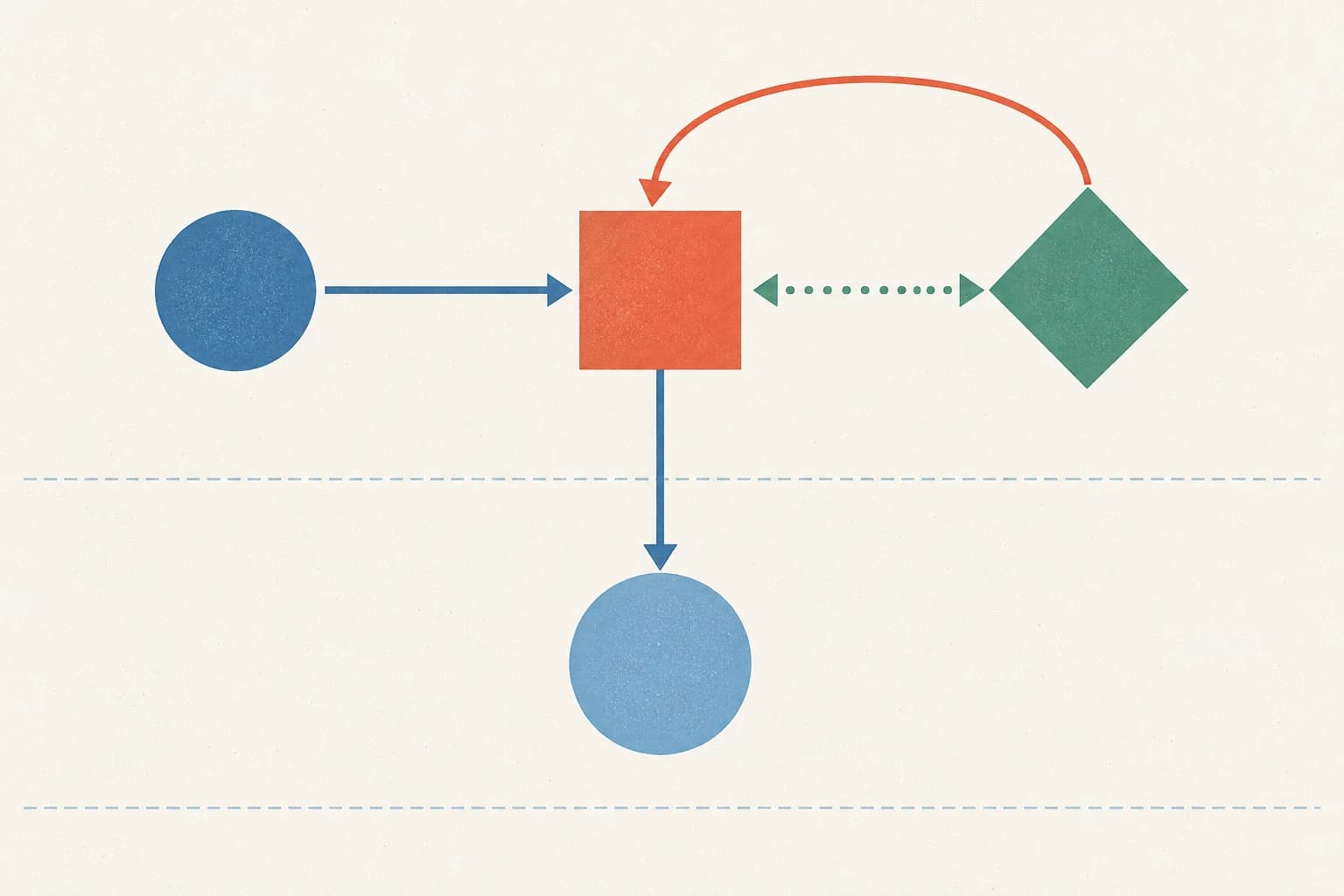
A dependency line should answer what blocks what, not just who talks to whom. If the reviewer needs an accessible proof at actual size, show that as a prerequisite for approval. If the venue booking does not affect poster creation, keep it in a logistics lane with its own deadline. Unrelated connectors make a schedule look complex without helping anyone plan.
Trace the effect of a slip
Suppose the data check slips by three days. The chart milestone and layout review may move, but the venue booking and print quote can continue. A dependency view helps the team distinguish a real critical path from work that still has room. Do not label a task “critical” solely because it appears near the end; confirm the effect of a delay with the owners.
Now consider a reviewer who is unavailable on the planned day. If approval has no backup and printing depends on it, that is a single-point dependency worth surfacing. The team might schedule a second reviewer or reserve an alternate print slot. A timeline can prompt contingency planning without guaranteeing that a schedule will survive every disruption.
Represent slack and external constraints
If there is a buffer between approval and print delivery, state what it protects against: proof correction, delivery transit, or installation. If the buffer is already committed to another task, do not depict it as free time. External deadlines such as a conference setup window should be visually distinct from internal targets so teams see which dates cannot move easily.
For tasks with uncertain durations, use a range or mark the assumption. For instance, data cleaning may take longer if source records contain missing values. The timeline can show the dependency and an estimate owner. Do not compress uncertainty into an exact-looking bar; precise geometry can suggest confidence the team does not have.
Replan from the changed dependency
When a milestone changes, update downstream links and ask each owner which dates truly move. A late analysis check may delay chart approval but not draft text review. Record the reason for the change in the project notes, then publish a readable updated timeline. Preserve the prior version if stakeholders need to understand how the plan evolved.
At a weekly check-in, review the next dependency rather than every completed task. Ask what output the next owner needs, whether it is ready, and what could block it. This makes the timeline a coordination aid rather than a static report. Keep detailed daily tasks in a separate list so the main visual continues to show the relationships that determine the poster’s readiness.
Use Autodiagram to draft the poster milestones from analysis through print approval, keeping venue logistics in a parallel line where appropriate. Choose a timeline layout and edit labels to distinguish blockers from independent tasks. Once the owners verify dates, export SVG for a research plan or PNG for the team’s progress review.